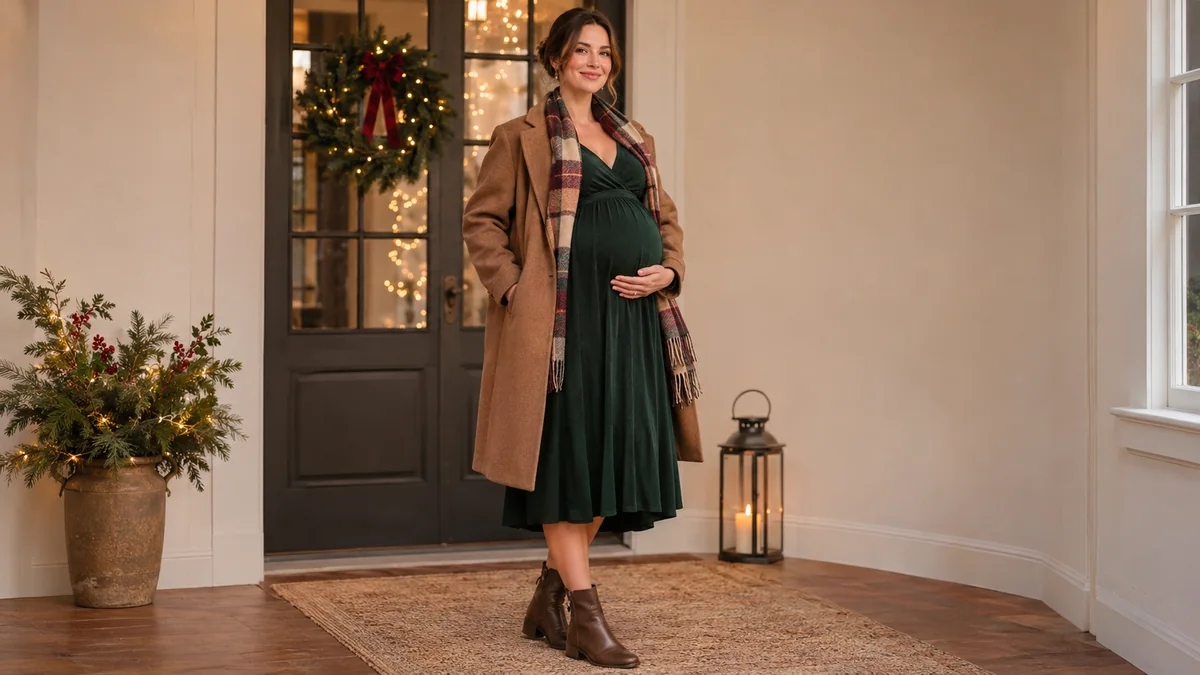
Christmas outfit planning gets easier when you start with the occasion, not a single “maternity Christmas dress.” A family dinner, office party, outdoor lights walk, and Christmas morning all ask for different amounts of warmth, movement, polish, and sitting comfort.
This guide gives you 15 outfit formulas for December celebrations. Each one can be built with maternity clothing, non-maternity pieces, or a mixture of both. Use the formula as a starting point, then adjust the layers, shoes, and proportions for your trimester, climate, body, and comfort on the day.
Quick planning rule: choose the activity you will do most—sitting, walking, standing, eating, traveling, or posing for photos—then test the outfit around that activity before Christmas arrives.
Affiliate Disclosure: As an Amazon Associate I earn from qualifying purchases.
Christmas pregnancy outfit planner at a glance
| Look | Occasion | Base outfit | Maternity option | Non-maternity option | Best comfort check |
|---|---|---|---|---|---|
| 1 | Office holiday party | Jewel-tone midi + tailored layer | Stretch maternity midi | Bias-cut or loose-waist midi | Raise arms and sit in a conference chair |
| 2 | Cocktail or formal party | Velvet or satin column | Ruched maternity gown | Empire or generously cut formal dress | Walk, sit, and use the restroom easily |
| 3 | Casual family gathering | Knit dress + boots | Ribbed maternity dress | Oversized sweater dress | Check itch, stretch, and lap comfort |
| 4 | Christmas Day at home | Soft knit set + festive layer | Over-bump leggings | Drawstring wide-leg pants | Eat, lounge, and change position |
| 5 | Church or seasonal service | Midi skirt + sweater + coat | Stretch skirt or maternity dress | Elastic-back skirt with room to tuck | Stay warm while seated |
| 6 | Family photos | Solid dress + texture | Ruched dress or jumpsuit | Wrap, smocked, or stretch dress | Pose, bend slightly, and layer outdoors |
| 7 | Outdoor lights walk | Base layer + coat + boots | Maternity coat or extender | Roomy wool or puffer coat | Traction and usable pockets |
| 8 | Christmas market | Warm sweater + jeans + flat boots | Over-bump jeans | Stretch denim with a longer top | Walk for the expected duration |
| 9 | Christmas Eve dinner | Festive top + fluid trousers | Maternity trousers | Pull-on or elastic-back trousers | Waist comfort after a meal |
| 10 | At-home date night | Wrap top + soft skirt or pants | Wrap maternity dress | Adjustable wrap or knit separates | Comfort under a blanket and at the table |
| 11 | Travel or airport day | Layered set + slip-on shoes | Maternity joggers | Wide-leg pull-on pants | Security, sitting, and temperature changes |
| 12 | Workplace dress-down day | Festive sweater + comfortable trousers | Maternity ponte pants | Stretch trousers with a longer knit | Desk sitting and repeated bending |
| 13 | Ugly-sweater gathering | Novelty layer + simple base | Roomy maternity sweater | Borrowed oversized sweater | Fabric weight and overheating |
| 14 | Snowy or cold-weather visit | Thermal base + knit + weatherproof outerwear | Layered maternity basics | Longline coat over flexible separates | Warmth without restricted movement |
| 15 | New Year’s crossover | Metallic accessory + rewearable base | Stretch velvet or sequins over a bump-friendly base | Slip dress with a cardigan or blazer | Remove scratchy or heavy pieces |
For broader holiday styling beyond Christmas-specific occasions, compare this planner with our holiday pregnancy outfits guide. For colder everyday errands, our cold-weather pregnancy outfit ideas focus more heavily on practical warmth.
15 Christmas pregnancy outfit formulas
1. Jewel-tone midi dress for an office holiday party
A knee- or mid-calf-length dress in emerald, burgundy, teal, or deep blue looks festive without requiring novelty Christmas graphics. Choose a silhouette that follows your shape without compressing your ribs or abdomen. A maternity version may use side ruching and a higher front hem; a non-maternity option can be a stretchy ribbed midi, bias-cut dress, or softly gathered style with room through the torso.
Finish it with a cropped or regular-length blazer, opaque tights if the weather calls for them, and low block heels, loafers, or polished ankle boots. Keep jewelry light if you will be carrying a bag, greeting people, or eating while standing. Try sitting in the type of chair used at work and raising both arms before you commit. The outfit earns extra rewear value when the blazer and dress can work separately for meetings, dinners, or a winter baby shower.
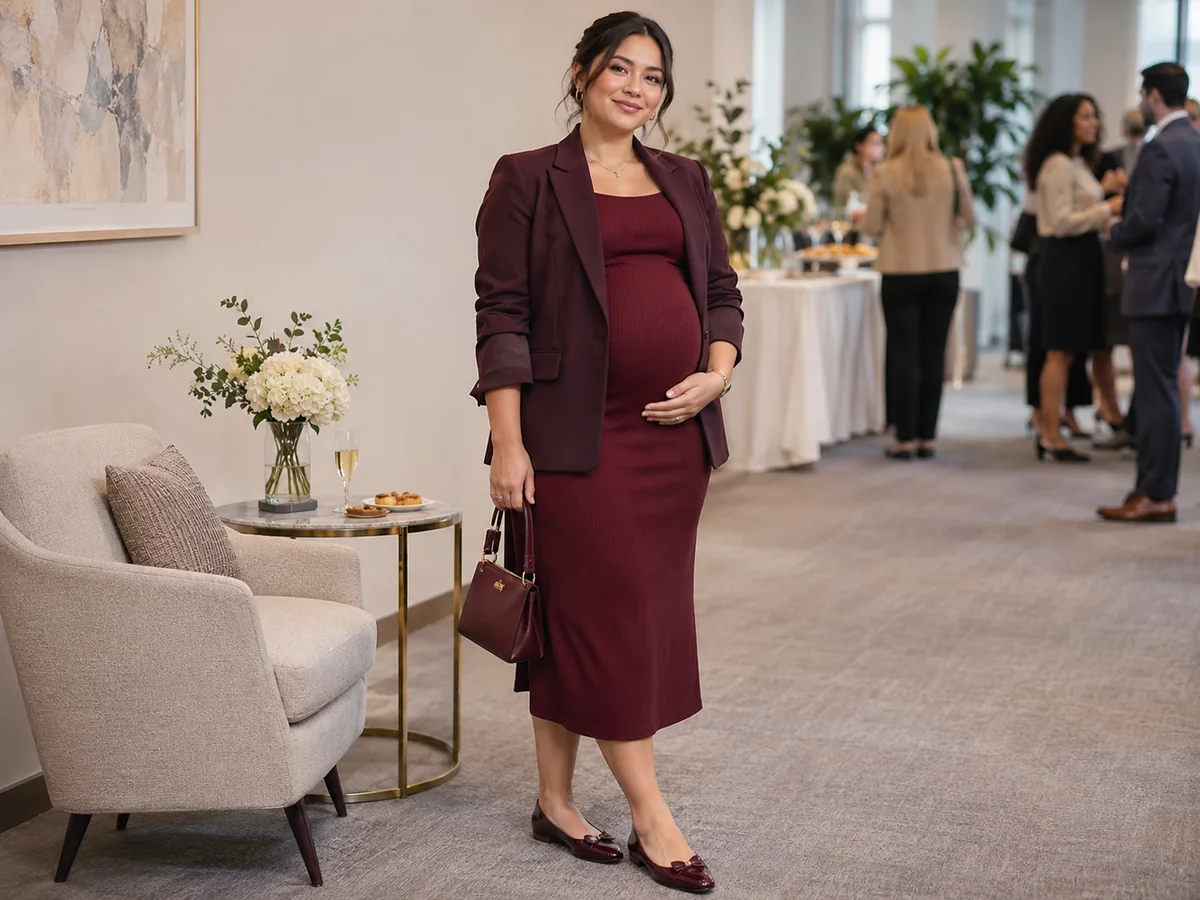
Researched candidate: the Motherhood Maternity side-ruched ribbed midi pregnancy dress is a researched example of the stretch, bump-accommodating midi this formula calls for. Check the current color range, fabric content, and size chart before buying; a maternity label is not a fit guarantee.
2. Velvet or satin column for a cocktail or formal party
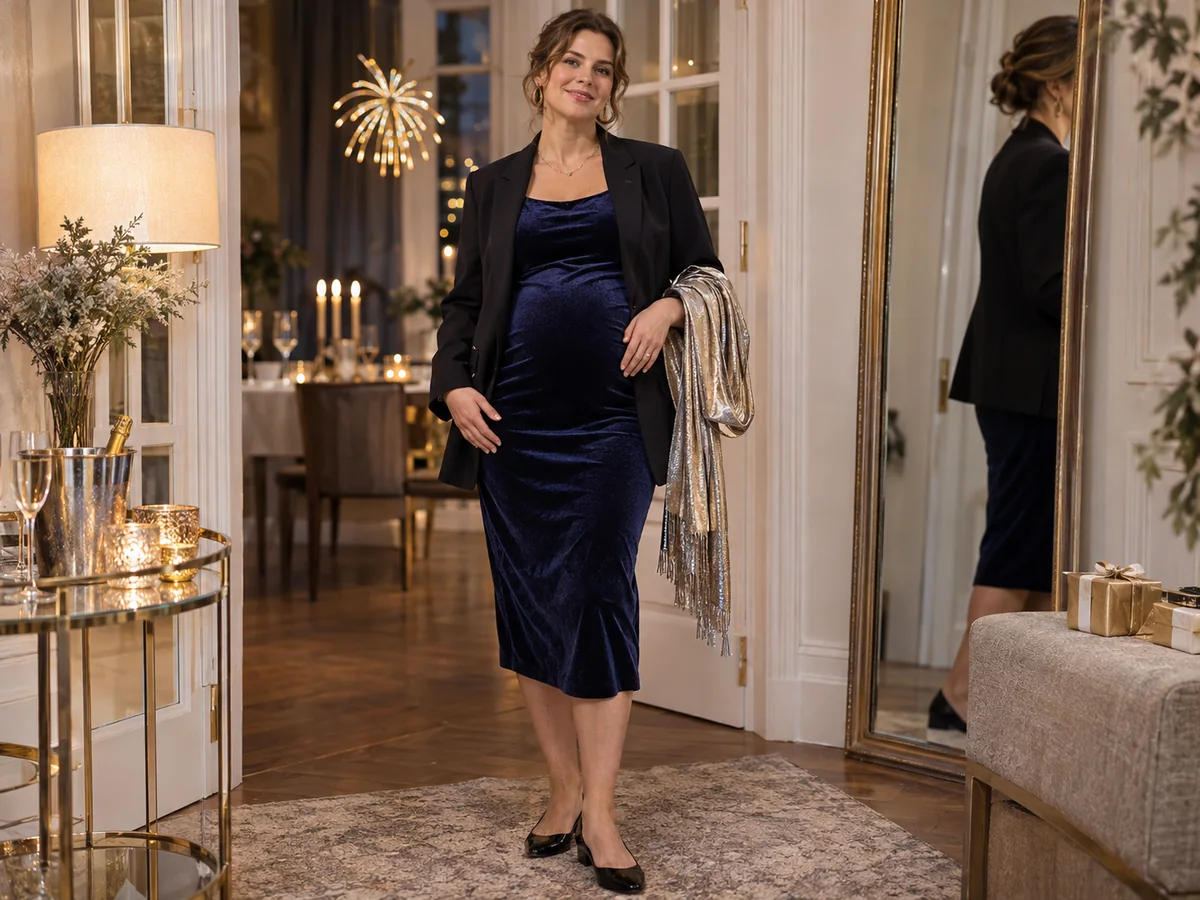
For a dressier invitation, let one fabric do the festive work. Stretch velvet gives warmth and depth; satin or a smooth draped fabric gives evening shine. A maternity column dress with ruching can accommodate a growing bump, while a non-maternity empire-waist, wrap, or generously cut slip dress may work earlier in pregnancy or for some bodies later on. Do not assume a non-maternity dress will fit simply because the waist is loose—check bust, armhole, and length as well.
Wear a long coat or dressy wrap over the dress and choose stable footwear rather than shoes you cannot comfortably walk in. A low heel, embellished flat, or dress boot can look formal with a metallic earring or small clutch. Practice the route from the car to the venue, sitting at a dinner table, and using the restroom. A velvet dress can be reworn with boots and a cardigan; a satin dress can become a wedding-guest outfit with different accessories.
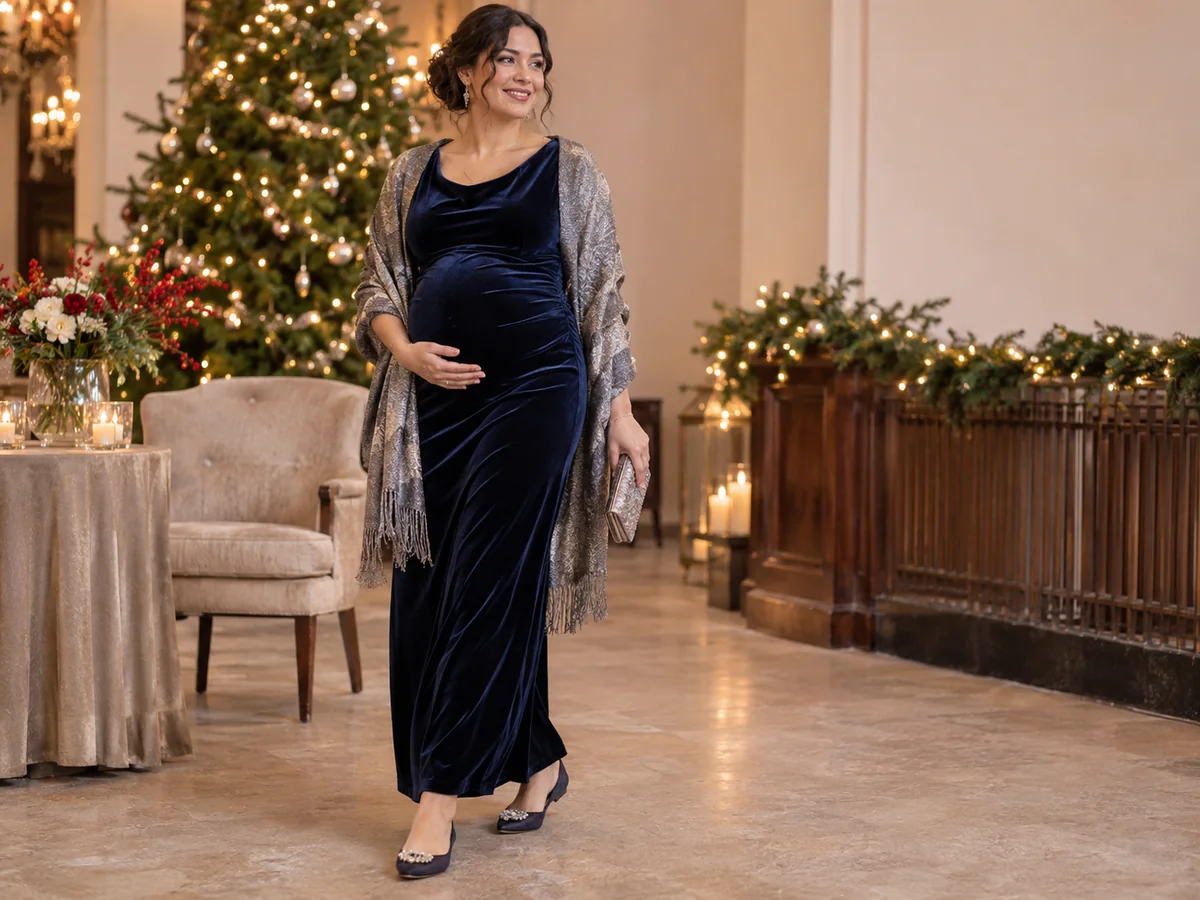
Researched candidate: the AISWI maternity wrap V-neck maxi dress is a researched example of a wrap silhouette with an empire waist that can dress up for a formal invitation. Confirm the fabric, length, and current size chart on the listing; wrap coverage varies by bust.
3. Ribbed knit dress for a casual family gathering
A soft knit dress is a useful middle ground when relatives may move between the kitchen, sofa, and dining table. Maternity ribbed dresses often have side ruching or extra length at the front. For a non-maternity alternative, look for a sweater dress with generous stretch, an A-line shape, or a long tunic worn over leggings—provided the fabric is not tight at the neck, arms, or bump.
Add opaque tights, flat knee-high boots, and a cardigan that can come off when the room warms up. If textured knits irritate your skin, wear a smooth cotton or bamboo-blend layer underneath only if the fabric and care label suit you; do not rely on a fiber label alone to predict softness. Check that the dress does not ride up when you sit cross-legged or settle into a low sofa. After Christmas, the same dress works for errands, work-from-home days, and winter lunches.
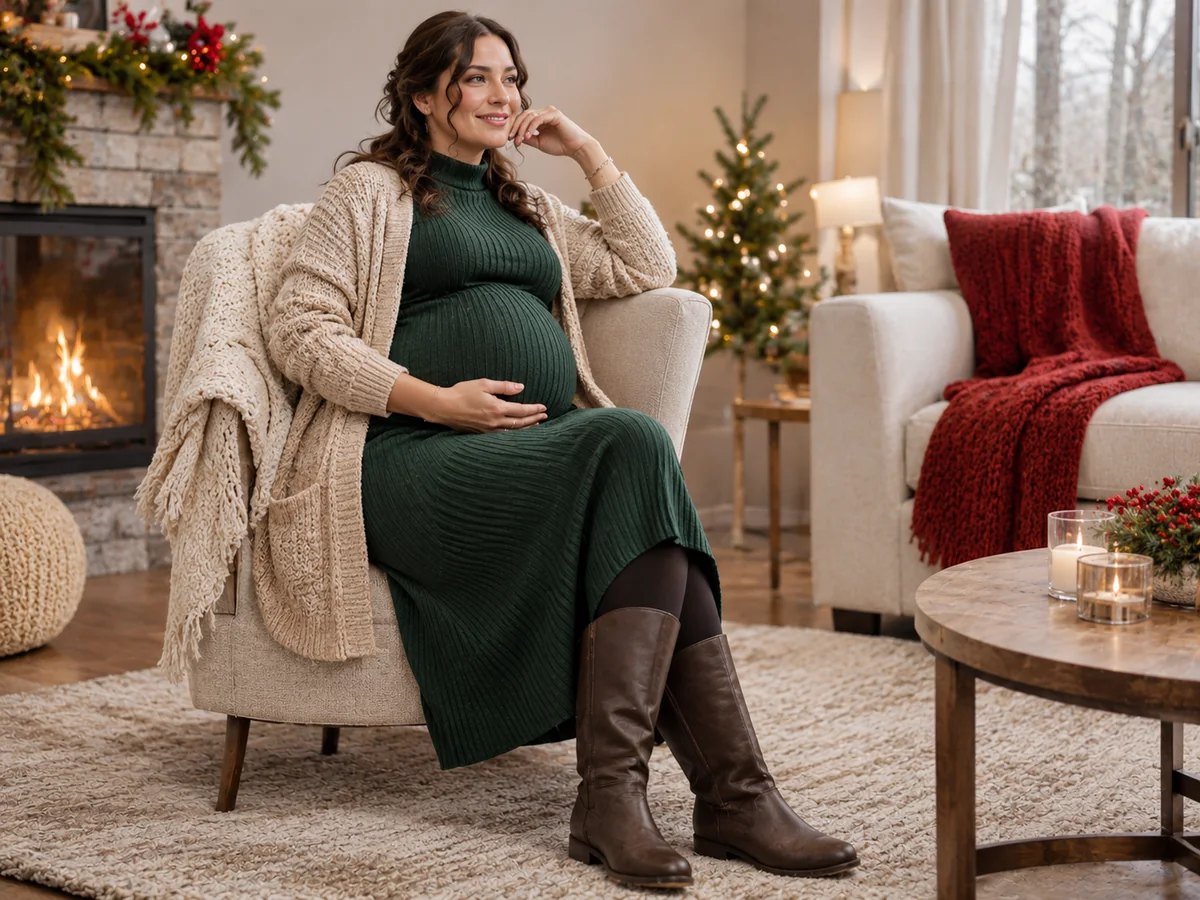
Researched candidate: the WANTROY long-sleeve V-neck knit maternity sweater dress is a researched example of a soft knit dress suited to a relaxed gathering. Check the fabric blend, care instructions, and current size chart; knit feel and itch tolerance are individual.
4. A soft knit set for Christmas Day at home
Christmas morning is a good time to prioritize movement and temperature control over a highly styled silhouette. Try a coordinated knit top with over-bump leggings or wide-leg pants, then add a red, green, cream, or metallic cardigan for a festive finish. Maternity leggings can provide a taller, bump-covering panel; non-maternity joggers or drawstring pants may be more adaptable if the waistband sits comfortably below or above the bump without rolling.
Wear warm socks or supportive indoor shoes with a sole if you will be moving around the kitchen. Keep the top long enough to stay comfortable when you reach, sit on the floor, or open gifts, and choose layers that will not trap too much heat near the stove. This formula is highly rewearable: separate the top and pants, add sneakers, and use them for ordinary mornings long after the decorations come down.
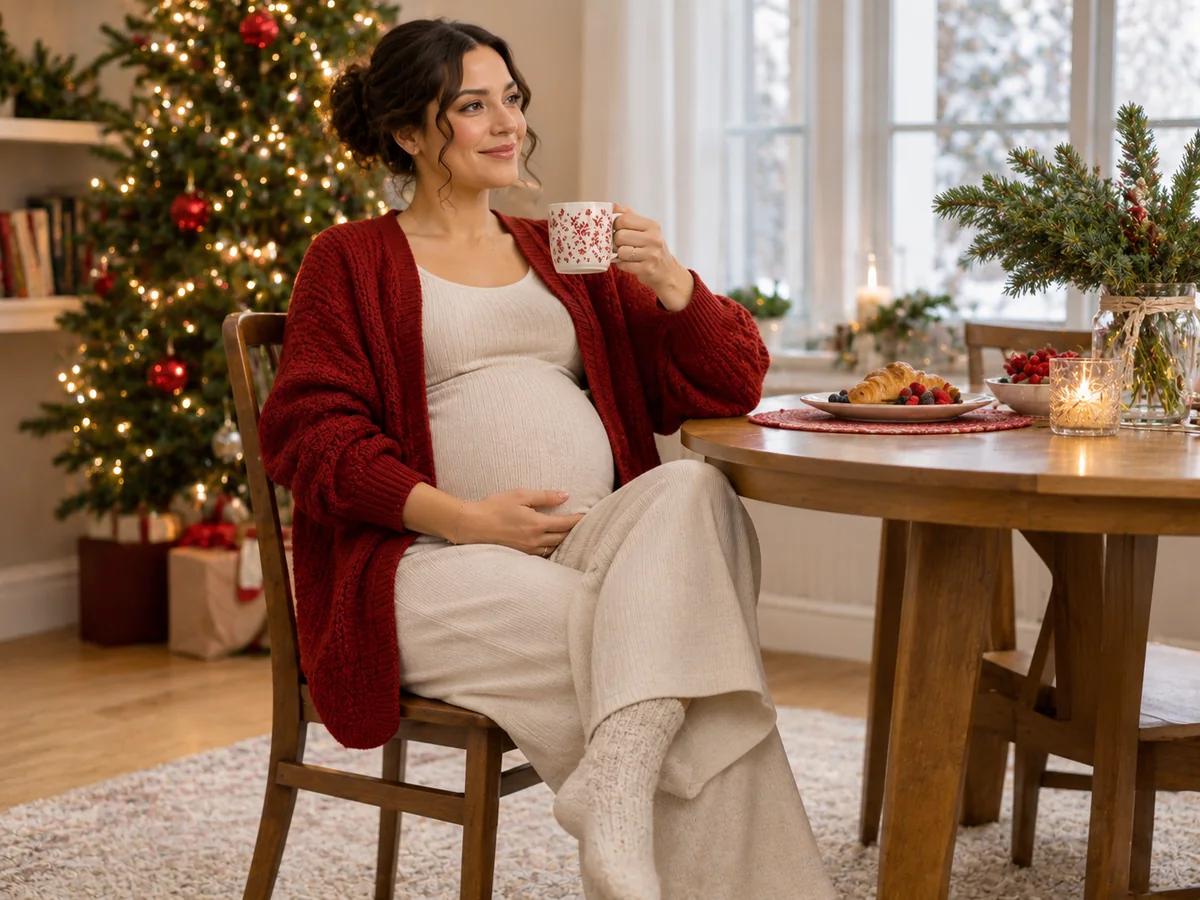
Researched candidate: the Motherhood Maternity Essential Stretch over-the-belly leggings are a researched example of the bump-covering base this formula uses. Confirm the fabric, inseam, and current size range; one panel height does not suit every body or stage.
5. Midi skirt and sweater for church or a seasonal service
A midi skirt, soft sweater, and long coat can feel polished while allowing more adjustment than a fitted dress. Maternity skirts may have a full over-bump panel or a stretch waistband; a non-maternity elastic-back, wrap, or gently pleated skirt can work if the waistband does not dig in when seated. Tuck only if it feels comfortable—an untucked sweater or half-tuck can be just as intentional.
Choose tights and boots suited to the temperature, then add a scarf or simple brooch for color. A flat or low block heel is often easier to manage on steps and hard floors than a narrow heel. Before leaving, sit for the length of a service, check that the coat closes comfortably, and make sure the skirt does not creep upward. The pieces can be reused for work, winter dinners, or other formal daytime events.
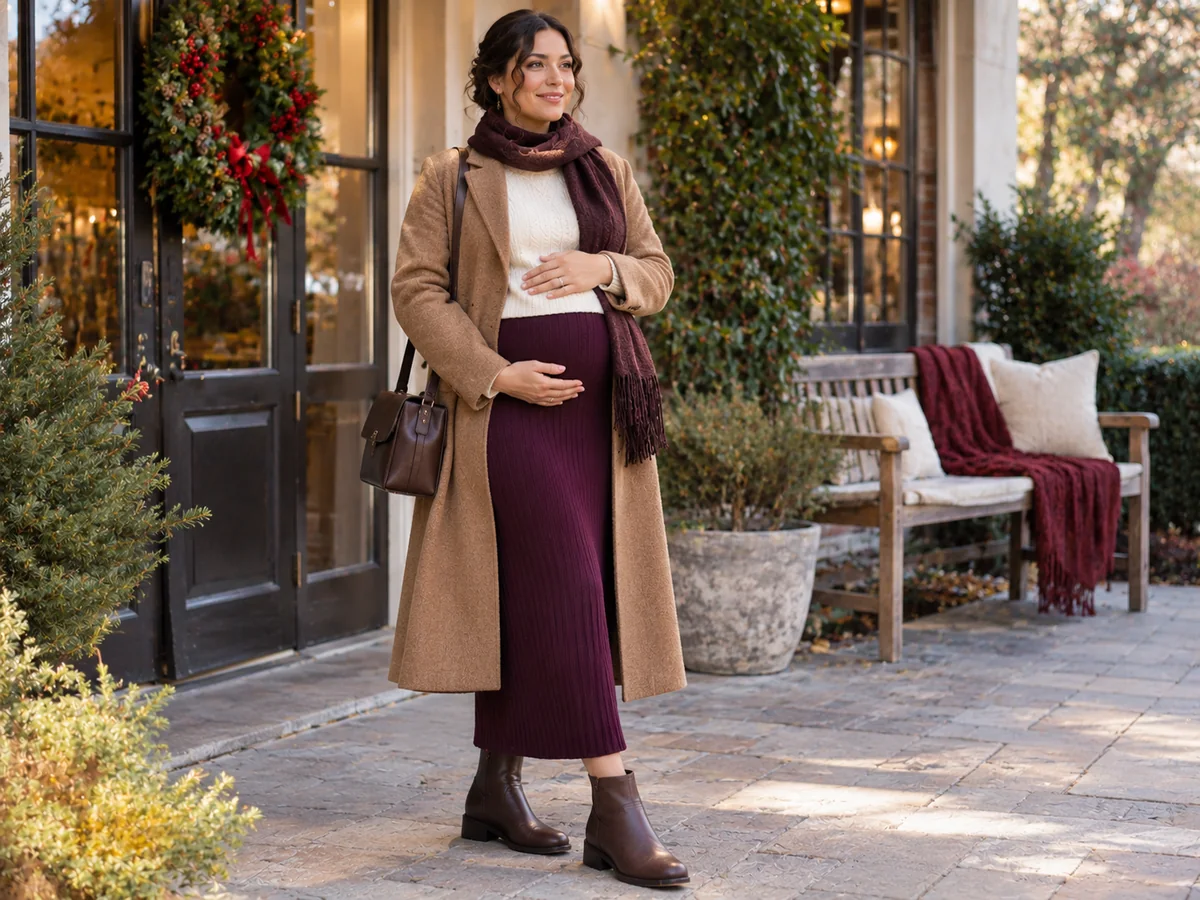
6. A solid dress with texture for family photos
For Christmas-card or family photos, a solid base keeps attention on faces while texture—velvet, cable knit, ribbing, corduroy, or a subtle shimmer—adds visual interest. A ruched maternity dress, wrap dress, or stretch jumpsuit can show the bump without requiring a posed hand-on-belly stance. Non-maternity options include a smocked dress, wrap silhouette, or loose midi with a cardigan worn open.
Coordinate rather than match: choose one color family and let other family members use neighboring shades. Add boots, a wool coat, or a textured shawl if photos are outside. Test sitting, walking, and lifting your arms to adjust a child’s coat. Avoid a hem that requires constant pulling down or sleeves that restrict reaching. After the session, remove the photo-specific accessories and wear the base to a dinner, service, or winter event.
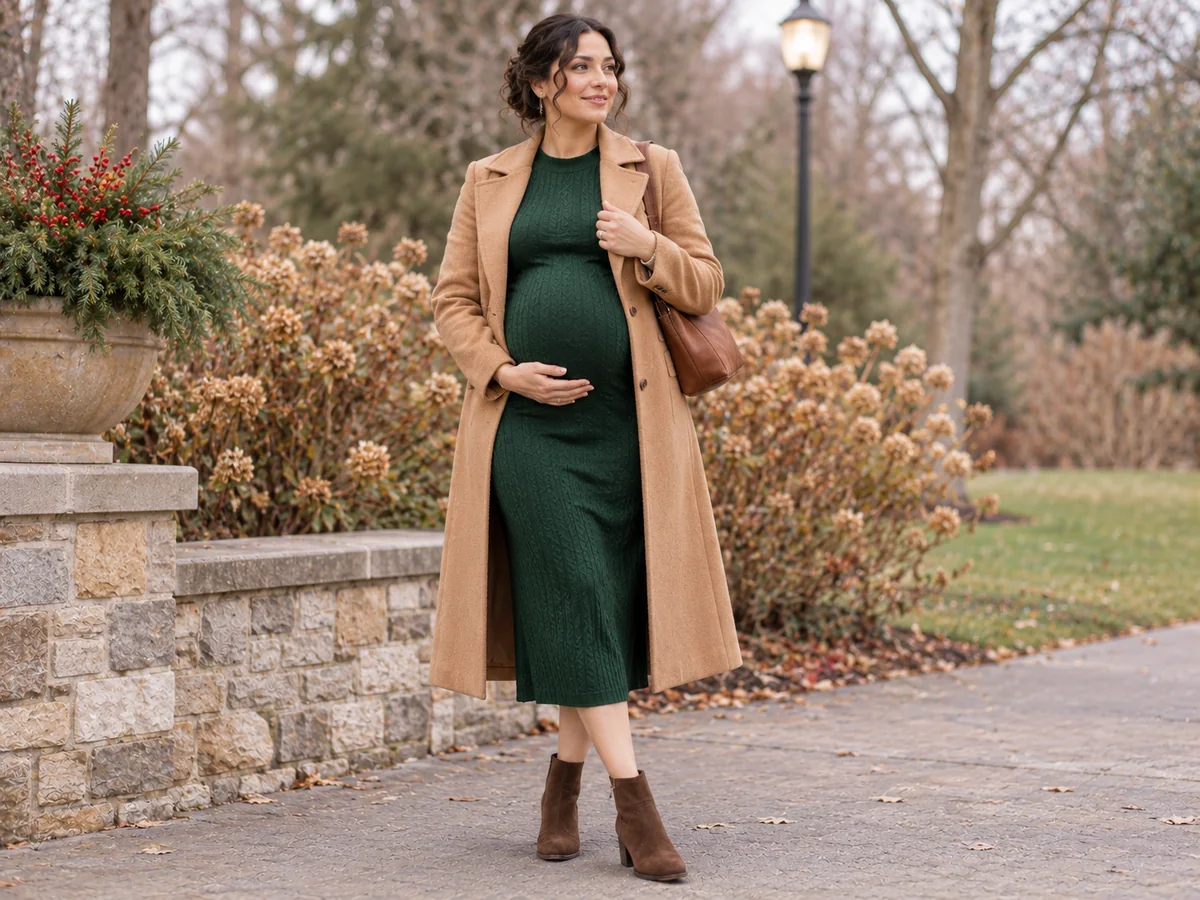
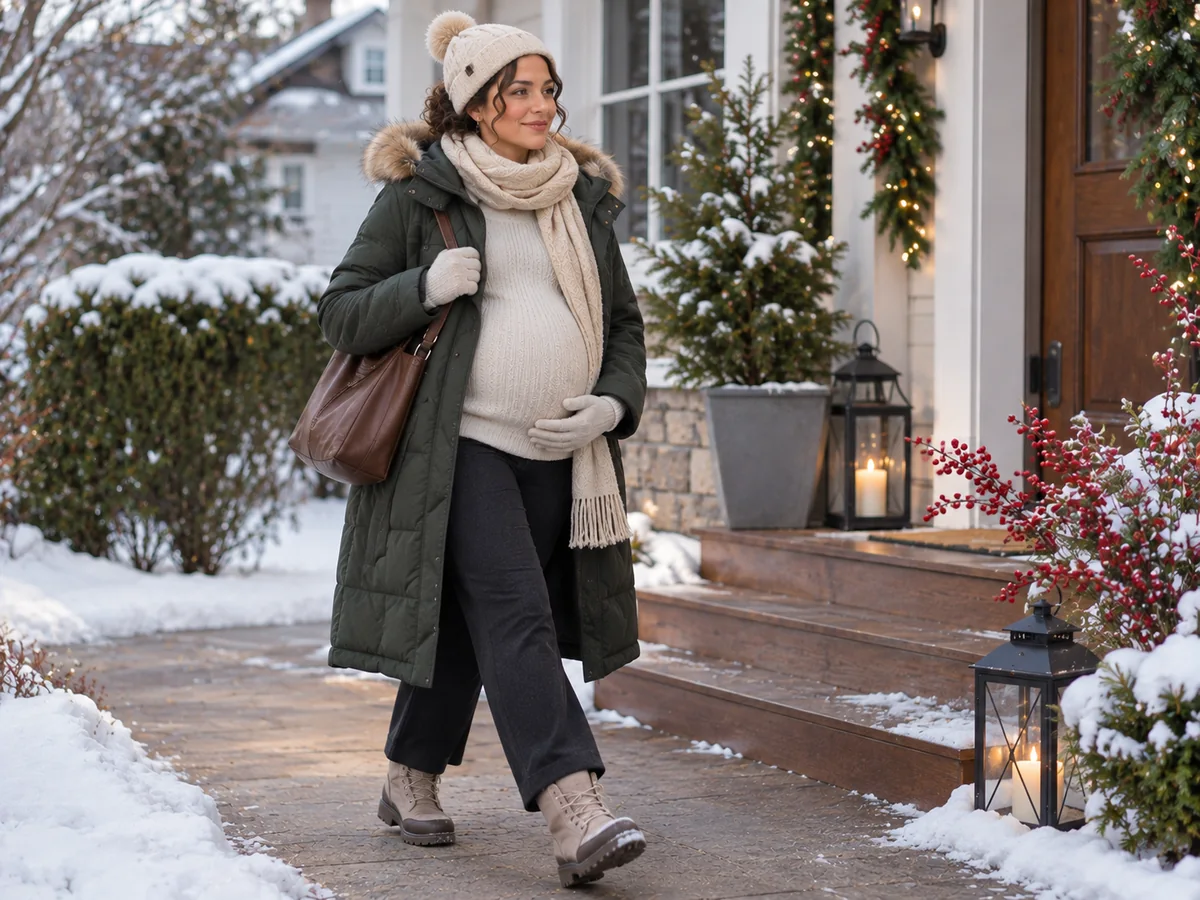
7. Thermal base layers, a coat, and boots for an outdoor lights walk
Outdoor lights are magical, but standing still in December can feel much colder than walking between displays. Start with a smooth base layer, flexible pants or leggings, a warm mid-layer, and a coat that allows your arms to move. A maternity coat or coat extender can make room for a later-pregnancy bump; a non-maternity longline puffer, wool coat, or roomy parka may work if it closes without strain and leaves space for layers.
Choose boots with a secure fit and traction appropriate for the surface. Add a hat, gloves, and a scarf that can be removed indoors, and use a crossbody or coat pocket so your hands are free. Check the forecast and the route rather than assuming a particular coat is warm enough. This is a practical outfit for winter walks, travel days, and outdoor holiday markets after the Christmas lights are gone.
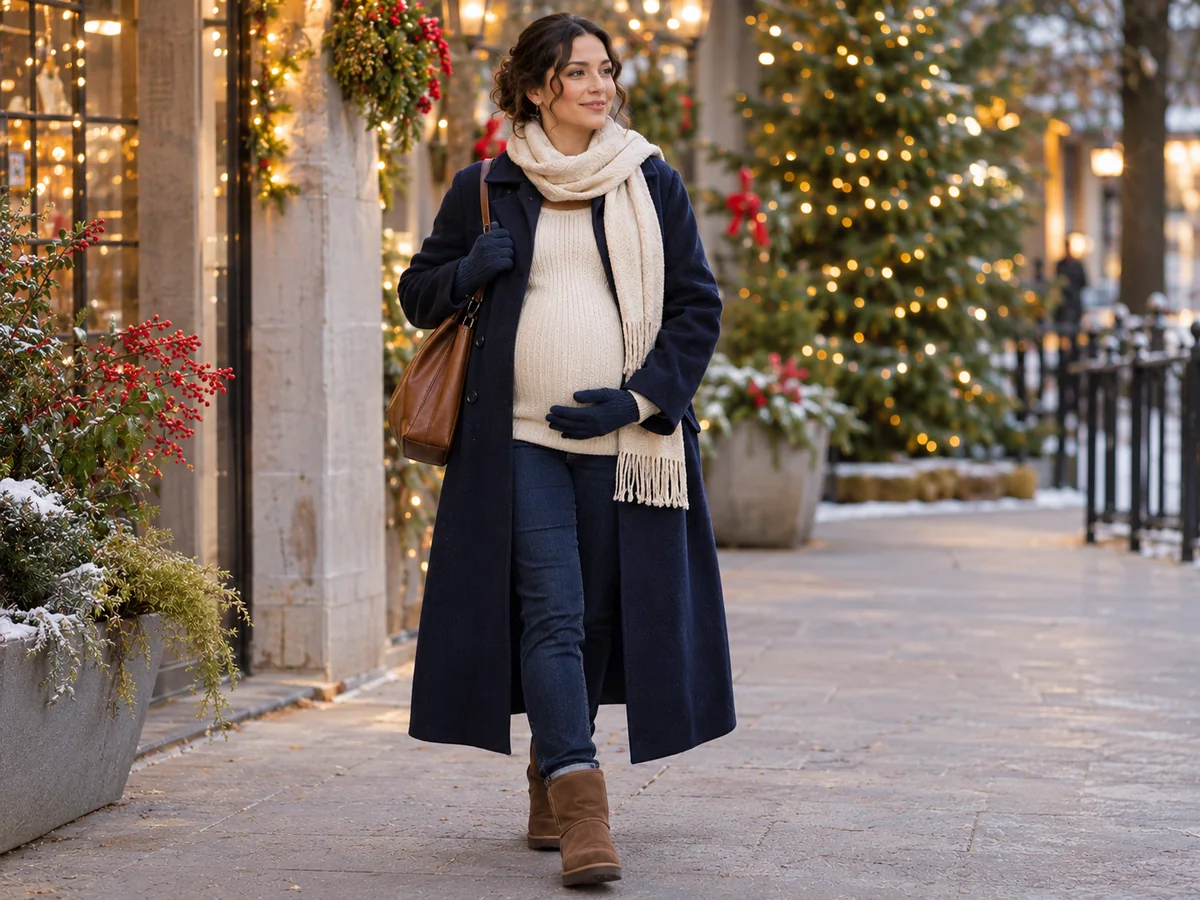
Researched candidate: the Modern Eternity 3-in-1 maternity coat is a researched example of a coat built to make room for a bump, with a removable panel that can also be used before and after pregnancy and for baby-wearing. Verify the warmth rating, closure, and current size chart; no coat is warm enough for every forecast.
8. Warm sweater, stretch denim, and flat boots for a Christmas market
A Christmas market usually involves more walking and less predictable seating than a dinner. Pair a festive sweater—fair-isle, cable, red, cream, or deep green—with jeans or soft trousers and a coat. Maternity jeans can use a jersey belly panel or side stretch; non-maternity stretch denim may work earlier in pregnancy or with a longer top, but avoid sizing down to create a “held-in” effect.
Flat boots, cushioned socks, and a small hands-free bag keep the formula practical. If you expect to queue, bring a layer that opens easily and plan where you can sit. Check that the sweater is not so bulky that your coat restricts your shoulders. Rewear the denim and boots with plain knits, and style the sweater with a skirt or wide-leg pants for another holiday gathering.
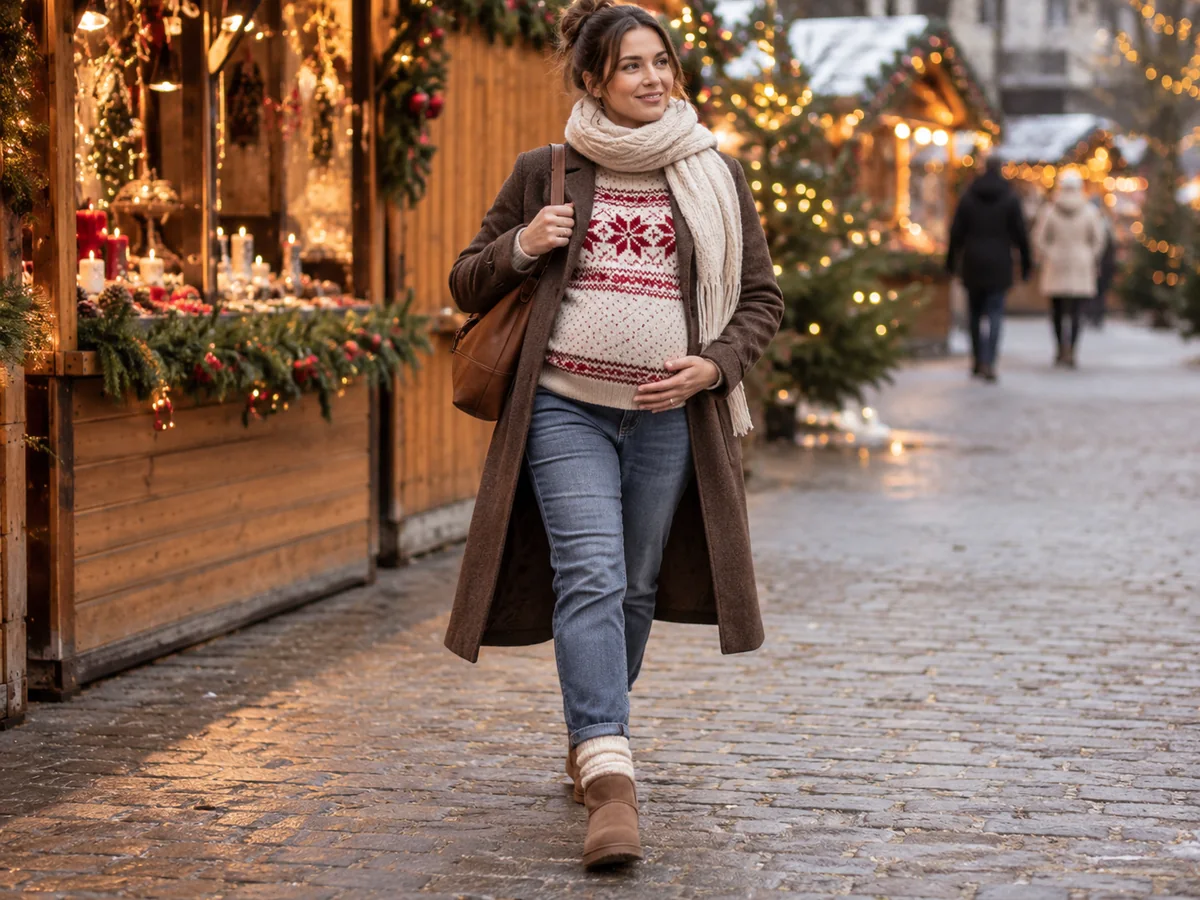
Researched candidate: the Skechers Synergy Cold Daze walking boot is a researched example of a flat ankle boot suited to a day on your feet. Check the fit, closure, and sole on the listing; no boot guarantees traction on every surface, so match it to the actual conditions.
9. Festive top and fluid trousers for Christmas Eve dinner
A special top can make comfortable trousers feel occasion-ready. Try a velvet blouse, satin shell, beaded knit, or jewel-tone wrap top with fluid wide-leg pants. Maternity trousers with a jersey panel can stay comfortable through a meal; non-maternity pull-on trousers, elastic-back styles, or soft pleated pants may work when the waistband does not press into the bump while sitting.
Add a cardigan, cropped jacket, or longline blazer depending on the room temperature. Pointed flats, loafers, or low boots keep the look polished without making dinner feel like a balancing exercise. Sit at the table for 20–30 minutes during your try-on, take a few deep breaths, and check whether the waistband shifts. Both pieces can be worn separately for work, travel, or postpartum dressing.
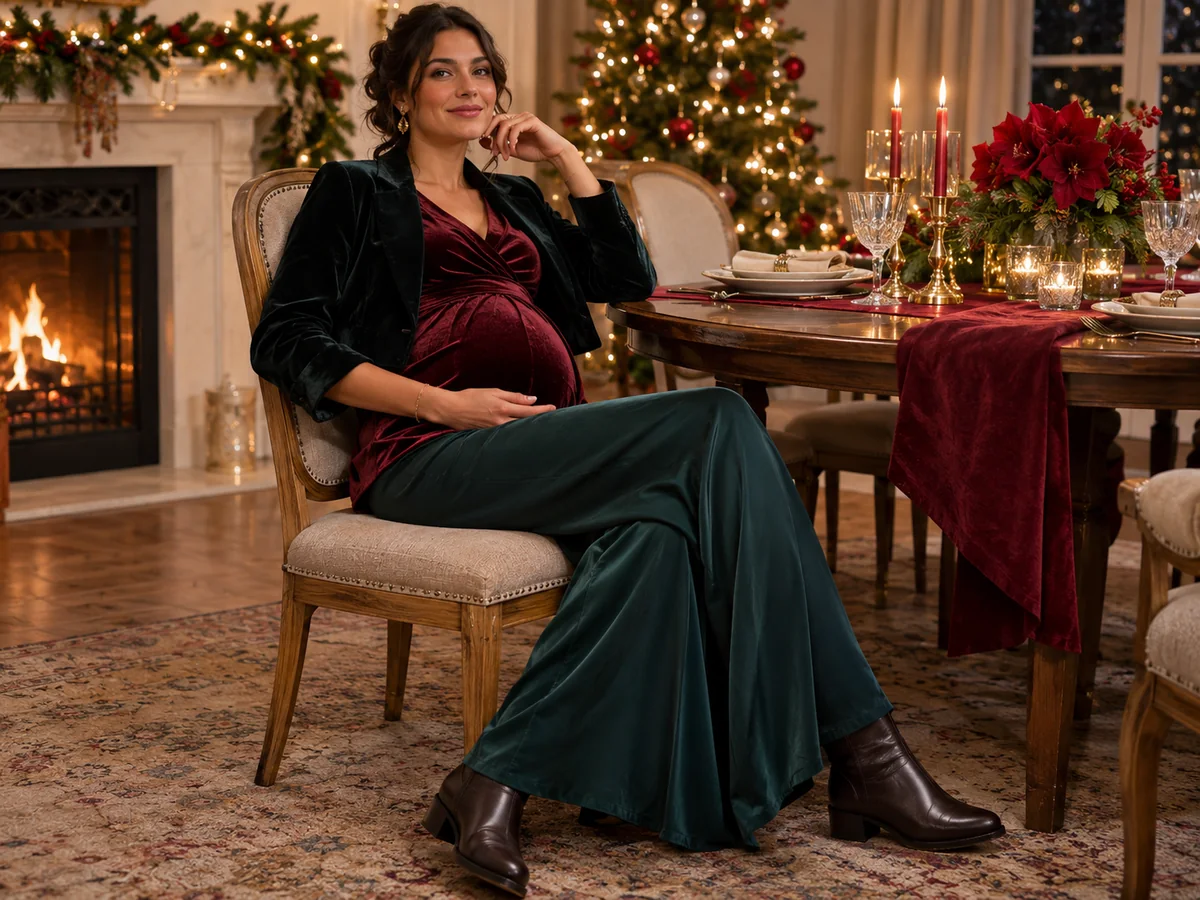
10. Wrap top with soft skirt or pants for an at-home date night
For a quiet Christmas Eve or date night at home, choose an outfit that feels special without sacrificing the ability to curl up. A wrap-style top or dress lets you adjust coverage as your bust changes. A maternity wrap dress can offer extra length and ruching; a non-maternity wrap, tie-front, or softly draped knit can be adaptable if the ties do not fall across a pressure point.
Pair it with a soft skirt, wide-leg pants, or leggings and a warm cardigan. Bare feet may be fine indoors, but grippy socks or supportive slippers are useful on hard floors. Keep jewelry and sleeves clear of cooking tasks, and test the outfit seated at the table and on the sofa. The base can later become a nursing-friendly or everyday look only if its opening and fit suit your needs—do not buy it on that promise alone.
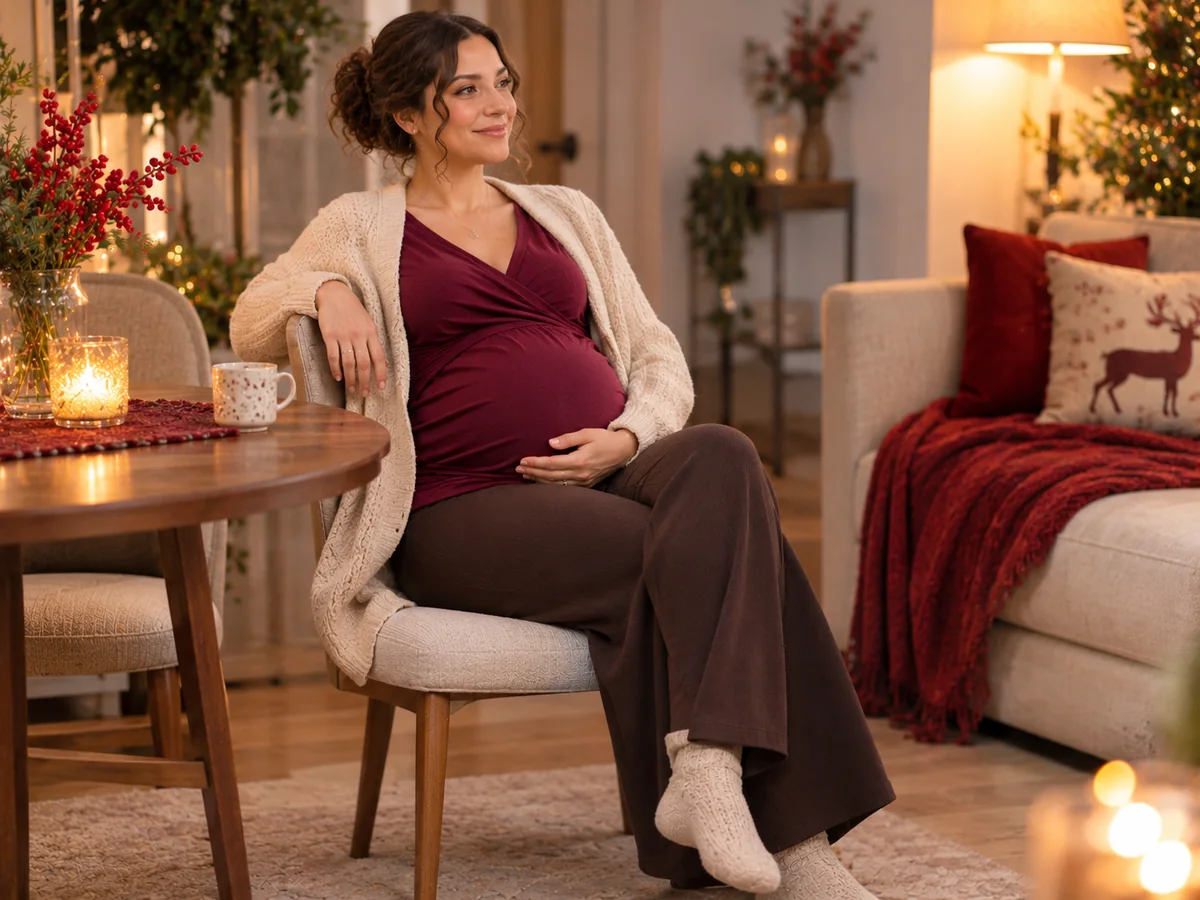
11. A layered travel set for an airport or road trip
Travel days reward simple layers: a breathable base, soft trousers, a long cardigan or overshirt, and a coat that can be removed. Maternity joggers or leggings can provide a familiar bump fit; non-maternity wide-leg pull-on pants, relaxed trousers, or a soft jumpsuit may be adaptable if the waistband and rise remain comfortable while seated.
Choose shoes that are easy to remove when needed and secure enough for walking through a terminal or rest stop. Keep a spare top and socks accessible, and use a crossbody or backpack only if it feels comfortable for you to carry. Avoid a long hem that drags or a cardigan that catches on armrests. Each component can be reused for appointments, errands, and post-holiday travel.
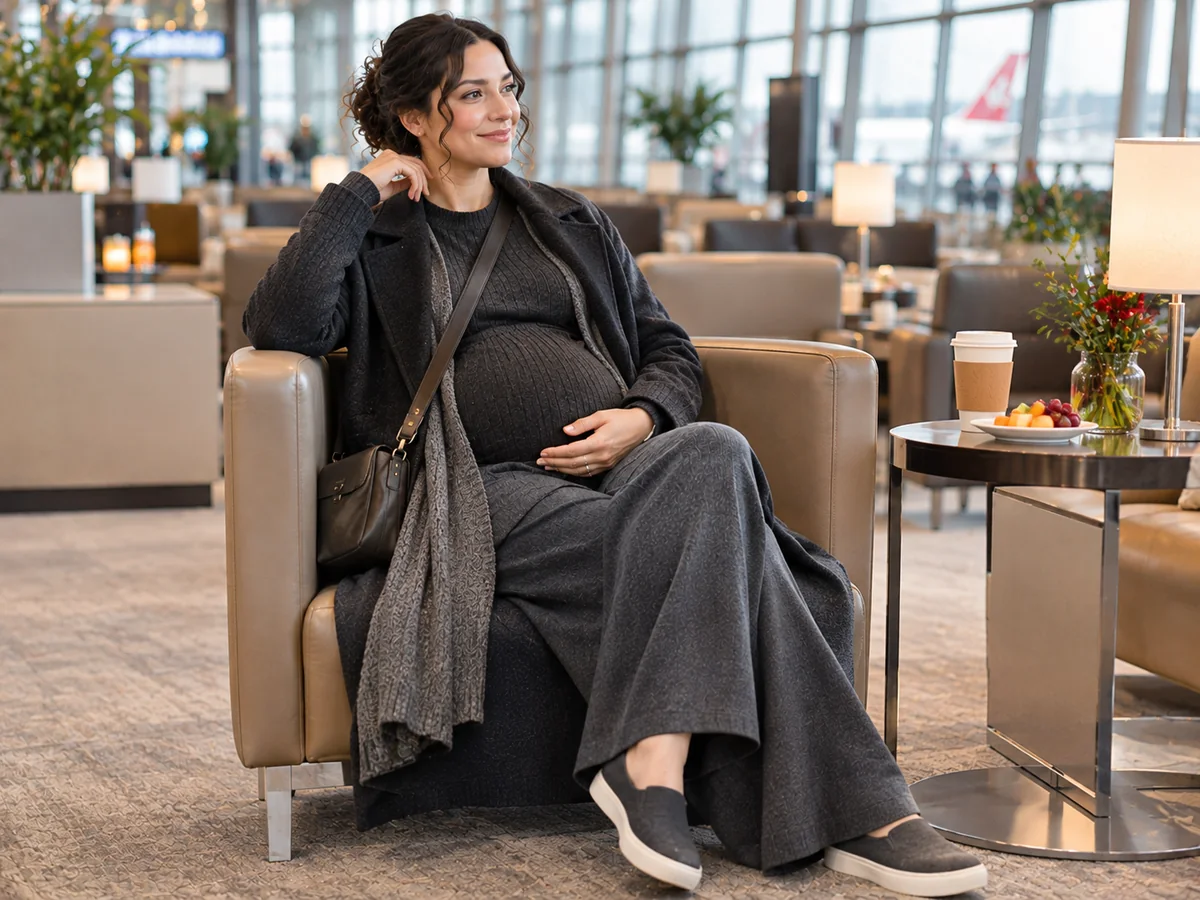
12. Festive sweater and comfortable trousers for a workplace dress-down day
A seasonal sweater in burgundy, pine, ivory, or a subtle metallic thread can do most of the work. Pair it with maternity ponte pants, a stretch trouser, or a pull-on skirt. Non-maternity options include elastic-back trousers, wide-leg pants, or a longer sweater over leggings if your workplace dress code allows them.
Finish with loafers, ankle boots, or a clean flat and one small accessory such as a brooch, headband, or earrings. Make sure the sweater does not shed or itch during a full workday, and check that you can reach a desk drawer, sit at a meeting table, and use the restroom without adjusting it repeatedly. The formula transitions easily into January by swapping the festive accessory for a scarf or plain belt.
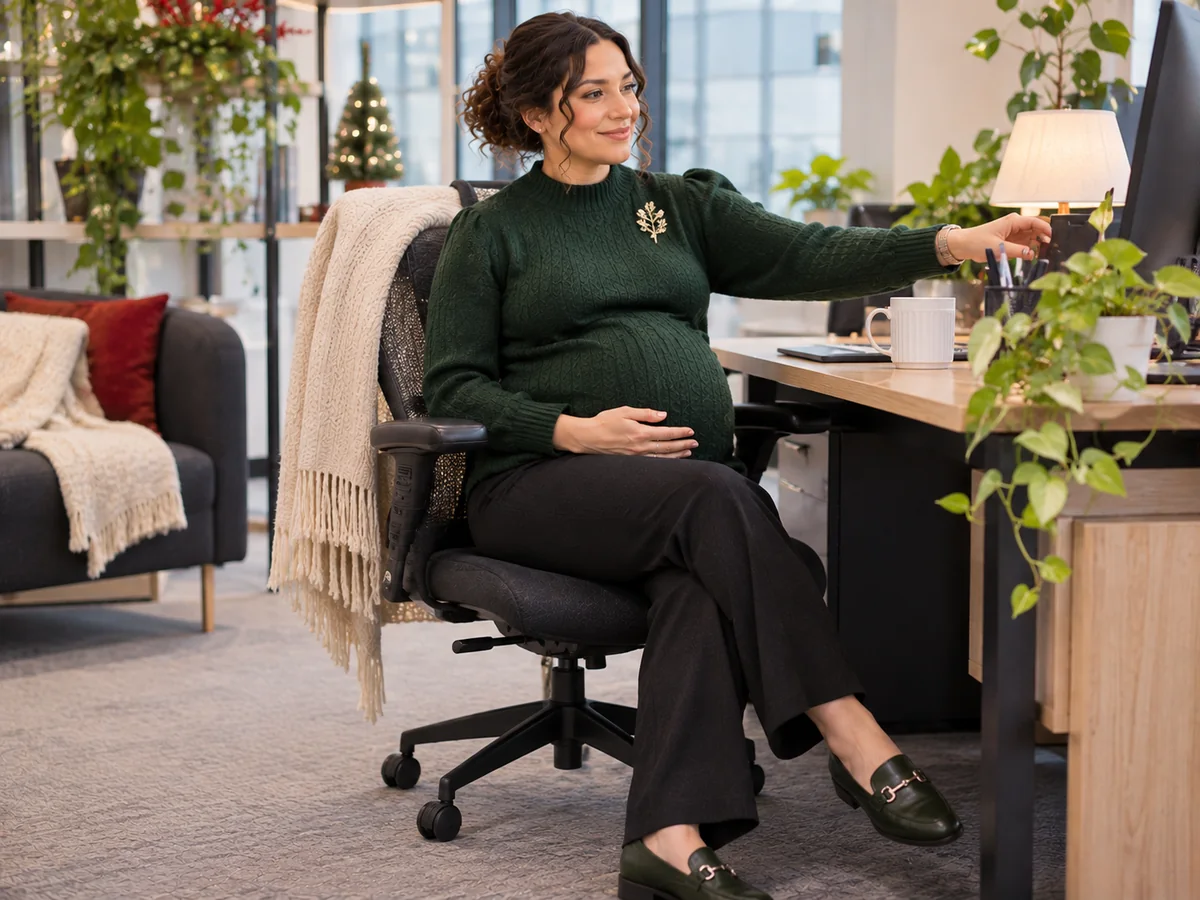
13. Novelty sweater over a simple base for an ugly-sweater gathering
If the event calls for an intentionally loud sweater, keep everything underneath straightforward. Maternity leggings, a stretchy skirt, or soft jeans give a roomy sweater a clean base. A non-maternity oversized sweater borrowed from a partner or friend can work, but inspect the shoulder seams, sleeve length, and total weight before wearing it for hours.
Use flat boots or sneakers and skip extra accessories that might catch on the sweater’s decorations. If the garment is heavy, hot, scratchy, or stiff at the neckline, wear it for the photo or judging moment and carry a plain cardigan as a backup. A good novelty sweater can be worn again for a themed family photo, but a simple base is the better long-term purchase.
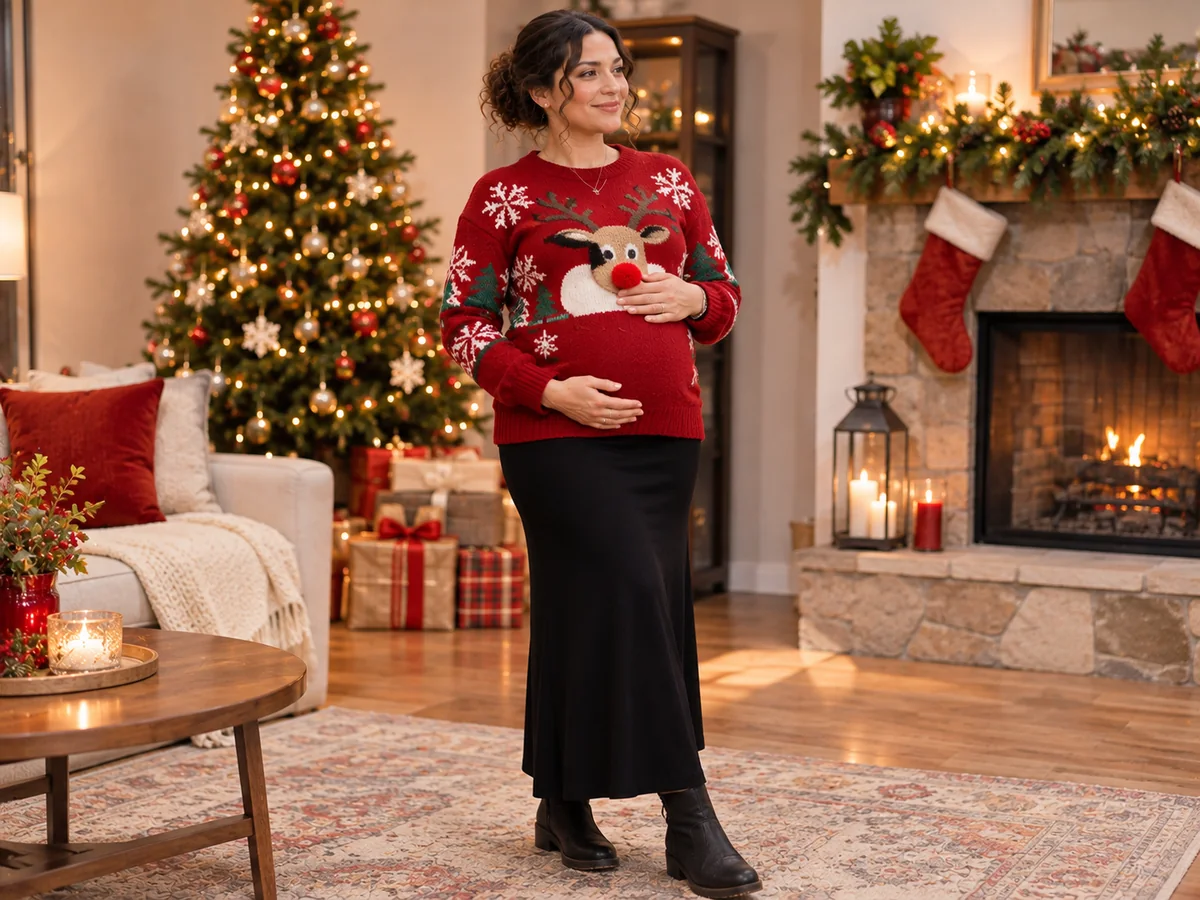
14. Thermal layers and weatherproof outerwear for a snowy visit
When snow or icy weather is part of the plan, build from the ground up. Use a comfortable base layer, a mid-layer that can be removed indoors, flexible pants, warm socks, and a coat with enough room for your current stage. Maternity basics can simplify the fit; non-maternity pieces can be useful when they are cut generously and do not create pressure at the waist or bust.
Select footwear for the actual conditions, not just the outfit photo. Look for a secure closure, stable sole, and enough room for comfortable socks. Add gloves with usable fingers if you will handle a phone or keys. Keep outdoor time flexible, move carefully, and use an indoor layer when you arrive. These pieces can carry you through the rest of winter and are generally more useful than a one-event novelty outfit.
15. A rewearable base with one metallic accessory for a New Year’s crossover
If you have another celebration immediately after Christmas, buy or style one base that can travel across both events. A stretch velvet dress, black jumpsuit, solid knit set, or wrap silhouette can become festive with metallic earrings, a beaded bag, a shimmery shoe, or a sparkly hair accessory. Maternity and non-maternity versions both work when the fabric allows comfortable movement and the neckline or waist does not feel restrictive.
Layer with a blazer, cardigan, or coat rather than committing to a single-season party garment. Choose the accessory after you have tested the base sitting, walking, and reaching. Remove anything scratchy, heavy, or noisy before the event. The strongest rewear strategy is usually a calm base plus one changeable accent: it can work for a winter birthday, wedding, dinner, or postpartum occasion if the fit remains right.
How to adapt Christmas outfits by trimester or pregnancy stage
First trimester
You may not need maternity clothing yet, and many people prefer familiar outfits while they decide what feels comfortable. Look for stretch, adjustable ties, soft waistbands, longer tops, and layers that let you change temperature without changing the whole outfit. If nausea, bloating, breast tenderness, or fatigue affects your plans, prioritize low-pressure fabrics and shoes that are easy to remove. A non-maternity wrap dress, elastic-back skirt, or relaxed trouser can be more useful than buying a full maternity wardrobe immediately.
Second trimester
This is often a useful stage for mixing maternity and non-maternity pieces. A maternity base can provide length and room at the bump, while a non-maternity cardigan, coat, blazer, scarf, or accessory can make the outfit feel personal. Check the fit at the bust and shoulders as well as the waist; pregnancy changes are not limited to one measurement. If you are shopping ahead, leave room for the date of the event rather than judging the outfit only on the day you try it on.
Third trimester
Comfort during sitting, walking, meals, and bathroom breaks matters more than a theoretically perfect silhouette. Maternity dresses, over-bump leggings, pull-on trousers, and roomy layers can reduce repeated adjustments, but one person’s comfortable panel may feel too warm or tight to another. Try the outfit at the time of day you expect to wear it, with the underwear, tights, and shoes you plan to use. A short event-friendly outfit is often better than a beautiful look that requires standing through pain or fatigue.
Maternity or non-maternity: which should you choose?
There is no rule that a Christmas outfit must come from a maternity section. Maternity clothing is designed around changing proportions, but non-maternity clothing can be adaptable when it has the right cut and stretch. The choice often depends on when the event falls, how much you want to spend, whether you expect to rewear the item, and what feels comfortable on your body.
- Choose maternity first when you need extra front length, a bump panel, side ruching, or a fit you can trust for a later event.
- Try non-maternity first for cardigans, coats, relaxed sweaters, accessories, elastic-back skirts, wrap shapes, and generously cut layers.
- Check the whole garment rather than relying on the label. Bust, shoulders, armholes, hem length, seat, and fabric recovery all affect comfort.
- Do not size up automatically. A larger size may add width without adding the front length or bust room you need. Compare measurements and use the retailer’s return policy.
Inclusive fit guidance for Christmas maternity outfits
Pregnancy does not produce one standard shape, and “bump-friendly” is not a guarantee of comfort. Use the notes below as questions to ask of a garment, not promises about what will fit every reader.
- For petite frames: check the finished length, shoulder seams, sleeve length, and rise. A midi may become a maxi, and an oversized sweater may overwhelm your proportions. Cropped layers or a shorter hem can add balance without requiring a tight fit.
- For tall frames: look for enough front length, sleeve length, and trouser inseam. A maternity panel or longer tunic can prevent a top from riding up, but check that the hem remains practical with boots.
- For plus-size shoppers: compare the actual garment measurements, stretch percentage, and size range rather than assuming a single cut will work. Look for reliable shoulder room, supportive straps where relevant, and enough ease to sit comfortably. A monochrome base, open layer, or strong accessory can create structure without hiding your body.
- For fuller busts: test wrap coverage, button placement, armholes, and whether a blazer pulls across the chest. A camisole or smooth base layer can make a lower neckline more comfortable if you want extra coverage.
- For an earlier or smaller bump: flexible waist details, ruching, belts worn above the bump, and layers can add shape without requiring maternity sizing. Avoid buying a very oversized garment only to create room; it may lose the shape you want.
- For a later or larger bump: prioritize front length, sitting comfort, and room to layer. Side ruching, an empire seam, or a full panel may work, but inspect whether the fabric stretches back and whether the neckline remains secure.
- For mobility, sensory, or temperature needs: select closures you can manage, stable footwear, low-irritation seams, breathable layers, and a coat that does not restrict your arms. Comfort is a valid styling requirement, not an afterthought.
For a dedicated photo-session wardrobe, see our pregnancy photoshoot outfit ideas. That guide serves a camera-led need, while the formulas here are designed for real December activities.
Layers, footwear, and accessories that make the outfit work
Layers
Plan for the difference between the front porch, a heated car, a crowded restaurant, and an outdoor photo location. A cardigan, blazer, overshirt, scarf, or coat that opens easily gives you control. Test the complete outfit with the outer layer closed; a base that works alone may become restrictive when you add a sweater and coat.
Footwear
Choose shoes according to the surfaces and distance you will actually cover. Stable flats, loafers, low block heels, ankle boots, and weather-appropriate flat boots can all look festive with the right color and texture. Try them with the socks or tights you plan to wear, walk on the same type of flooring if possible, and check that you can get them on and off without strain. For snow, rain, or ice, traction and a secure fit matter more than matching a photo reference.
Accessories
A metallic earring, velvet headband, brooch, red lip, embellished bag, tartan scarf, or sparkly hair clip can make a simple base feel like Christmas. Keep hands free when you will walk or carry packages, and avoid accessories that press against a sensitive neckline or catch on knitwear. One strong accessory is often easier to remove if the room becomes warm.
Five-minute try-on test before you buy or wear it
- Sit: stay seated in a dining chair, car seat, or sofa for several minutes.
- Walk: take a normal walk and a short flight of steps if the event includes them.
- Reach: lift your arms, put on your coat, and reach for a shelf without the garment pulling.
- Layer: add the tights, base layer, bra, coat, and shoes you intend to use.
- Use the restroom: make sure closures and hems are manageable without help.
- Check the return policy: keep tags and packaging until you have tested the outfit indoors, and verify the policy before ordering a time-sensitive item.
How to make a Christmas outfit worth rewearing
- Start with a solid base in black, navy, cream, burgundy, emerald, or another color you already wear.
- Use removable festive details—jewelry, scarf, bag, shoes, or hair accessory—rather than a head-to-toe novelty print.
- Choose separates when your schedule includes multiple events; a top or skirt can create a second look.
- Check whether the garment will still feel comfortable after pregnancy, but do not treat postpartum fit as a guarantee. Body changes, feeding plans, and personal preferences differ.
- Keep care instructions in mind. A hand-wash-only, highly delicate piece may not be the practical rewear you expect.
Frequently asked questions
What should I wear to a Christmas party while pregnant?
Match the outfit to the dress code and the activity. A stretch midi dress with a blazer works for many office parties; velvet or satin can suit a formal event; and a knit dress, sweater, or soft trousers may be better for a casual gathering. Add stable shoes and a removable layer, then test sitting and walking before the event.
Do I need a maternity Christmas dress?
No. A maternity dress can offer useful front length, ruching, or a bump panel, but non-maternity wrap, smocked, bias-cut, empire, and stretchy knit styles may also work. Check the full fit, especially bust, armholes, length, and comfort while seated, rather than choosing by label alone.
What can I wear for Christmas morning at home?
Try a soft knit set, over-bump leggings, wide-leg pull-on pants, or a simple dress with a festive cardigan. Choose fabrics and waist details that let you sit, eat, move around the kitchen, and change temperature easily. A metallic hair accessory or red cardigan can make comfortable clothes feel celebratory.
What shoes are best for a pregnant Christmas outfit?
The best shoes are the ones that suit the surface, distance, and your current comfort. Stable flats, loafers, low block heels, ankle boots, and weather-appropriate boots are all useful options. For outdoor winter plans, prioritize a secure fit and traction. Try shoes with the socks or tights you will actually wear.
How do I dress warmly for Christmas photos?
Build the outfit in layers: a comfortable base, a knit or blazer, and a coat or wrap. Use boots, tights, a scarf, gloves, or a hat when appropriate, and plan short outdoor intervals if standing still is uncomfortable. Coordinate colors across the family instead of relying on one thin festive dress.
How can I dress a bump without buying a complete new wardrobe?
Buy or borrow one comfortable base for the most important event, then use non-maternity layers and accessories you already own. Wrap styles, stretchy knits, elastic-back skirts, relaxed trousers, open cardigans, and roomy coats can extend what is in your closet. Check comfort and return policies rather than assuming a larger size will solve every fit issue.
Choose the outfit that lets you enjoy the occasion
The strongest Christmas pregnancy outfit is not necessarily the most elaborate one. It is the outfit that lets you sit through dinner, walk to the lights, appear in family photos, or relax at home without constantly tugging, overheating, or wishing you had chosen different shoes. Start with the occasion, build around comfort, add one festive detail, and keep the pieces useful beyond December.