

The third trimester broadly begins at week 28 and continues until birth. During these final months of pregnancy, eating can feel different from earlier stages. Appetite may increase for some people, stay fairly steady for others, or become harder to manage as pregnancy progresses. Energy needs also change later in pregnancy, but that does not mean simply “eating for two”.
As the baby grows, some people find that larger meals feel uncomfortable or that they become full more quickly. Heartburn and indigestion may become more noticeable later in pregnancy, and constipation can also affect eating comfort. For some people, smaller meals feel easier to manage, although these symptoms are not universal.
This guide focuses on practical ways to eat well during weeks 28–40: everyday foods, the nutrients that matter during late pregnancy, adjusting meals when appetite or comfortable portion size changes, managing common digestive symptoms, and following current UK food-safety advice. It builds on the wider principles in our Pregnancy Nutrition in the UK guide while keeping the advice specific to the final trimester and highlighting relevant UK guidance and support.
What matters most in weeks 28–40
In the third trimester, the aim is not a special “pregnancy diet”, but a varied, balanced pattern of eating that remains practical as pregnancy progresses. Include fruit and vegetables, starchy foods such as potatoes, bread, rice, pasta and cereals, regular sources of protein such as beans, pulses, eggs, fish, meat or suitable alternatives, and dairy foods or appropriate fortified alternatives.
Balance does not have to be achieved at every individual meal. It can be more useful to think about the overall pattern across the day and week, especially when appetite, meal size and food tolerance change.
Drinking regularly also matters. Rather than treating one fluid figure as a personalised target, aim to drink throughout the day and adjust according to thirst, activity, weather and symptoms.
Late pregnancy can make larger meals uncomfortable for some people. The growing baby can put more pressure on the stomach, and heartburn, indigestion or feeling very full may make smaller meals eaten more often easier to tolerate. This is an option rather than a requirement: if your usual meal pattern remains comfortable, there is no need to change it simply because you are in the third trimester. NHS guidance specifically recommends smaller, more frequent meals when indigestion or heartburn is a problem.
Energy needs do increase modestly towards the end of pregnancy, but pregnancy does not mean “eating for two”. Current NHS guidance uses an additional 200 calories a day during the final three months of pregnancy as general population guidance. That is not a personalised calorie target, and there is no need to make calorie counting the focus of eating well during the third trimester.
Supplement advice also needs context at this stage. Routine 400 microgram folic acid supplementation is recommended through the first 12 weeks, so it is not normally introduced as a new third-trimester requirement. Vitamin D advice continues to apply, with some differences between UK nations. In England, current NHS guidance recommends 10 micrograms daily between early October and late March, with year-round supplementation for some people at greater risk of deficiency. In Scotland, pregnant women are among the groups advised to take 10 micrograms throughout the year.
Iron levels are routinely checked during pregnancy, including at around 28 weeks. If anaemia or another deficiency is identified, follow the treatment recommended by your maternity team rather than starting or stopping supplements independently. Avoid supplements containing vitamin A in the form of retinol during pregnancy unless specifically advised by a healthcare professional.
Pregnancy food-safety precautions also continue throughout these final weeks. Foods that are advised against during pregnancy do not become safer simply because birth is approaching, so continue following current pregnancy food-safety guidance until the baby is born.
Practical priorities for weeks 28–40
| Priority | Practical approach |
|---|---|
| Variety | Aim for a mix of the main food groups across the day and week rather than making every meal “perfect”. |
| Fruit and vegetables | Include a variety regularly; UK guidance recommends at least 5 portions a day. |
| Starchy foods | Include bread, potatoes, rice, pasta, cereals or similar foods; choose wholegrain or higher-fibre versions where they suit you. |
| Protein | Include regular sources such as beans, pulses, eggs, fish, meat, tofu or other suitable alternatives. |
| Calcium-containing foods | Include dairy foods or suitable calcium-fortified alternatives. |
| Fluids | Drink regularly through the day and adjust according to thirst and circumstances. |
| Meal pattern | If large meals worsen fullness or heartburn, smaller meals more often may feel easier. |
| Supplements / treatment | Follow the vitamin guidance relevant to your UK nation and continue any treatment specifically prescribed by your maternity team. |
Key nutrients during the third trimester
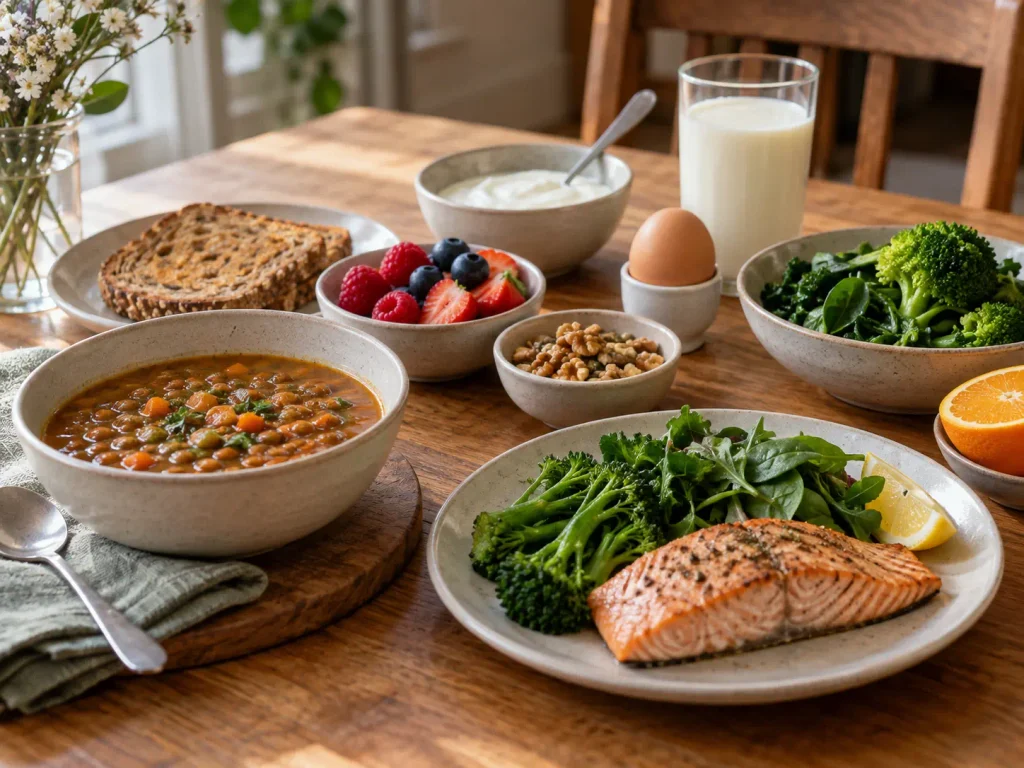
A varied diet remains the foundation during weeks 28–40. In late pregnancy, however, a few nutrients deserve particular attention because of routine antenatal monitoring, pregnancy supplement guidance, or the practical challenge of fitting nourishing foods into a smaller appetite. If fullness or heartburn makes meals smaller, including nutrient-rich foods regularly can be more useful than trying to make every meal large.
Iron
- Why it matters: Iron is needed to make haemoglobin in red blood cells, which carry oxygen around the body. It is particularly relevant at the start of the third trimester because routine antenatal blood tests include another iron check at around 28 weeks.
- Food sources: Meat, lentils, beans and other pulses, eggs, tofu, nuts and seeds, wholemeal bread, fortified cereals and green leafy vegetables can all contribute. Including vitamin-C-rich fruit or vegetables alongside plant sources of iron can also be useful.
- Supplement / clinical note: Iron tablets are not something everyone needs to start routinely. If blood tests show anaemia or low iron status, your midwife or doctor may recommend treatment. Follow the dose and duration advised by your maternity team.
Calcium
- Why it matters: Calcium helps maintain healthy bones and contributes to the development of your baby’s bones.
- Food sources: Pasteurised milk, yoghurt and suitable cheeses are useful sources. If dairy is not part of your diet, choose calcium-fortified plant alternatives where possible. Calcium-set tofu, pulses, tahini and some green vegetables can also contribute.
- Supplement / clinical note: Standard NHS pregnancy guidance does not advise routine calcium tablets for every pregnant person. For most people, the practical focus is on calcium-containing foods unless supplementation has been recommended for an individual reason.
Vitamin D
- Why it matters: Vitamin D supports bone and muscle health and helps the body regulate calcium and phosphate. It also contributes to the baby’s developing bones and teeth.
- Food sources: Oily fish, eggs and some fortified foods provide vitamin D, although it can be difficult to obtain enough from food alone.
- Supplement / clinical note: Advice is not worded identically across the UK. In England, current NHS pregnancy guidance recommends 10 micrograms (400 IU) daily between early October and late March, with year-round supplementation for some people at greater risk of deficiency. Wales broadly follows the seasonal approach. Scotland’s pregnancy-specific guidance advises 10 micrograms every day during pregnancy. Northern Ireland’s current official sources are not completely aligned on seasonal versus year-round use, so follow the current advice from your maternity service or healthcare professional.
Iodine
- Why it matters: Iodine is needed to make thyroid hormones, which have important roles during pregnancy, including in the baby’s brain and bone development.
- Food sources: Milk and other dairy products, fish and eggs are important UK dietary sources. If you use plant-based drinks, check the label because iodine fortification varies between products.
- Supplement / clinical note: The UK does not have a routine pregnancy-specific iodine supplement recommendation for everyone. People who eat little or no dairy, fish or eggs may benefit from individual advice. Avoid using kelp supplements as an iodine source because their iodine content can be highly variable and sometimes excessive.
Vitamin B12
- Why it matters: Vitamin B12 contributes to normal red-blood-cell formation and nervous-system function. It deserves particular attention when animal-source foods are absent or very limited.
- Food sources: Meat, fish, eggs, milk and other dairy foods naturally provide B12. People following a vegan diet need dependable fortified sources, such as suitable fortified breakfast cereals, plant drinks or other fortified foods.
- Supplement / clinical note: There is no blanket recommendation for every pregnant person to take a separate B12 supplement. If you eat little or no animal food, make sure you have a reliable source of B12 and discuss supplementation with a midwife, GP or registered dietitian where needed.
Omega-3 fats
- Why they matter: Long-chain omega-3 fats found particularly in oily fish contribute to development of the baby’s nervous system.
- Food sources: Salmon, sardines, mackerel, trout and herring provide the long-chain omega-3 fats EPA and DHA. Walnuts, chia seeds, flaxseed and rapeseed oil provide ALA, another omega-3 fat. ALA should not be treated as nutritionally identical to EPA and DHA.
- Supplement / clinical note: NHS pregnancy guidance recommends around two portions of fish a week, including one portion of oily fish, while limiting oily fish to no more than two portions weekly during pregnancy. nhs.uk Said, Routine omega-3 supplementation is not required for everyone. Avoid fish-liver oils such as cod-liver oil because they can contain high levels of vitamin A in the form of retinol.
Folate after 28 weeks
- Why it matters: Folate remains part of a nutritious diet throughout pregnancy and is involved in normal cell division and blood-cell formation.
- Food sources: Green leafy vegetables, broccoli, Brussels sprouts, lentils, beans, chickpeas, citrus fruit, wholegrains and some fortified cereals and breads can contribute folate or added folic acid.
- Supplement / clinical note: Routine UK prevention advice is 400 micrograms of folic acid daily before conception and until the end of the first 12 weeks of pregnancy. That does not mean everyone needs to start a new folic-acid supplement at 28 weeks. If folic acid has been prescribed for another reason, follow the instructions from your clinician.
Protein
- Why it matters: Protein supplies amino acids used for growth, maintenance and repair of body tissues.
- Food sources: Beans, lentils, chickpeas, tofu, eggs, fish, poultry, lean meat, nuts and seeds are practical choices. Milk, yoghurt and suitable soya foods can also contribute protein.
- Practical note: If larger meals become uncomfortable, protein can be spread across smaller meals and snacks — for example yoghurt with fruit, hummus with wholemeal toast, eggs with toast, lentil soup, or tofu with rice and vegetables. NHS pregnancy guidance focuses on including protein-rich foods regularly rather than asking everyone to calculate a personalised gram target.
Fibre
- Why it matters: Fibre supports normal digestion and can help with constipation, which is common during pregnancy.
- Food sources: Wholegrain breads and cereals, oats, brown rice, potatoes with their skins, lentils, beans, chickpeas, vegetables, fruit, nuts and seeds can all contribute.
- Practical note: Increase higher-fibre foods in ways that are comfortable and drink regularly alongside them. If constipation is persistent, painful or not improving, speak with your midwife, pharmacist or GP rather than simply adding increasingly large amounts of fibre.
Appetite and energy needs in the third trimester
Appetite does not follow one predictable pattern during weeks 28–40. Some people feel hungrier or want to eat more often, while others notice little change. Appetite can also fluctuate from day to day, and not everyone becomes noticeably hungrier in the third trimester.
At the same time, larger meals can become less comfortable for some people. As pregnancy progresses, pressure around the stomach can contribute to fullness, indigestion or reflux. These symptoms are not inevitable, but if they do occur, smaller meals eaten more often may feel easier than large portions.
How much extra energy is needed?
Pregnancy does not mean “eating for two”. Current UK guidance uses an average increase of around 200 calories a day during the final three months of pregnancy.
This is a population-level estimate, not a personalised calorie prescription. You do not need to start counting calories or deliberately add exactly 200 calories every day simply because the third trimester has begun. Individual needs vary according to factors such as body size, activity, multiple pregnancy, medical conditions and other clinical circumstances.
If you feel hungrier
If hunger increases, it can be more useful to make meals or snacks slightly more substantial while keeping the overall diet varied.
You could:
- add a protein-containing food such as egg, yoghurt, beans, lentils, hummus, tofu or nuts;
- include wholegrain bread, oats, potatoes, rice or another starchy food;
- add fruit or vegetables;
- include milk, yoghurt, suitable cheese or a fortified alternative;
- add nuts or seeds where appropriate;
- include an extra snack when you are genuinely hungry.
Simple combinations might include yoghurt with fruit and oats, wholemeal toast with egg, hummus with bread or vegetables, fruit with nuts, porridge made with milk or a fortified alternative, a small jacket potato with beans, rice with dal, or soup with wholegrain bread.
These are examples rather than a prescribed meal plan.
If larger meals feel uncomfortable
If you become full quickly or find that reflux or nausea is worse after larger meals, spreading food across the day may feel more comfortable. Smaller meals with nutrient-rich snacks in between can still provide a varied overall diet.
Some people also find that very large drinks with meals add to the feeling of fullness. There is no need to restrict fluids because of this. Instead, drink regularly across the day and adjust how much you have with meals according to comfort.
When individual advice may help
General third-trimester energy guidance may not be enough for everyone. More individual support can be useful with:
- multiple pregnancy;
- gestational diabetes or pre-existing diabetes;
- significant or continuing weight loss;
- prolonged or severe vomiting;
- previous bariatric surgery;
- severe dietary restriction or a very limited range of foods;
- another medical condition affecting eating, digestion or nutritional needs.
These situations may require advice from your midwife, GP, maternity team or a registered dietitian rather than relying only on general pregnancy nutrition guidance.
The main point is that late-pregnancy eating should remain responsive rather than rigid: eat according to hunger, choose a varied range of nourishing foods, and adapt meal size to what feels comfortable rather than forcing larger portions or restricting intake.
Heartburn, constipation, fullness and late-pregnancy nausea
Digestive comfort can become more variable during the third trimester. Some people notice more reflux, constipation, early fullness or nausea, while others have only mild symptoms or none at all. The aim is to make eating and drinking easier to manage while keeping the overall diet varied, rather than forcing large meals or cutting out foods unnecessarily.
Heartburn and reflux
Heartburn and indigestion are common during pregnancy and can become more noticeable later on. Hormonal changes and pressure from the growing baby on the stomach can both contribute.
Measures that may help include:
- eating smaller meals more often rather than very large meals;
- avoiding eating to the point of uncomfortable fullness;
- sitting upright while eating and afterwards;
- leaving about 3 hours between eating and going to bed;
- noticing foods or drinks that repeatedly make symptoms worse;
- reducing rich, fatty or spicy foods, or caffeinated drinks, if they are personal triggers.
These foods are not universal pregnancy bans. The useful approach is to notice what worsens your own symptoms rather than removing foods automatically.
If reflux remains troublesome despite these changes, ask a pharmacist, midwife, GP or maternity team about treatments that are suitable during pregnancy.
Feeling full quickly
As pregnancy progresses, some people find that their usual meal size becomes uncomfortable. Increasing pressure around the stomach can contribute to fullness, bloating or nausea after eating.
It may help to:
- have smaller portions;
- include nutrient-rich snacks between meals;
- spread food more evenly across the day;
- continue drinking regularly.
There is no need to force large meals simply because you are in late pregnancy. If having a very large drink with a meal adds to fullness, fluids can be spread more evenly across the day instead. This is an adjustment for comfort, not a reason to restrict fluids.
Constipation
Constipation is common during pregnancy. Practical measures include:
- wholemeal bread, wholegrain cereals and oats;
- fruit and vegetables;
- beans, lentils and chickpeas;
- drinking regularly;
- suitable physical activity where appropriate.
If your usual diet is relatively low in fibre, increasing it gradually may be more comfortable than making a sudden large change.
Prescribed iron can sometimes worsen constipation. Do not stop prescribed iron on your own. If constipation is becoming troublesome while taking iron, speak with your doctor, midwife or pharmacist about how best to manage it.
Late-pregnancy nausea
Nausea is most strongly associated with early pregnancy and usually improves by around 16–20 weeks, but it can continue for longer in some people.
For mild nausea without warning signs, approaches that may make eating easier include:
- eating small amounts more frequently;
- choosing plain foods such as toast, crackers, bread, rice or pasta when these are easier to tolerate;
- avoiding foods or smells that reliably trigger nausea;
- trying cold foods if cooking smells are difficult;
- sipping fluids regularly rather than taking a large amount at once if that feels uncomfortable;
- choosing foods you can tolerate rather than repeatedly forcing foods that worsen nausea.
These approaches are intended to make eating more manageable. They do not explain the cause of new symptoms or replace medical assessment when vomiting is significant.
A new or marked change in nausea or vomiting during the third trimester should not automatically be assumed to be ordinary pregnancy sickness.
Contact your midwife or maternity unit promptly if you cannot keep food or fluids down, have signs of dehydration, are losing weight, feel very weak, dizzy or faint, have persistent or severe vomiting, significant abdominal pain, vomit blood, or develop symptoms that are new or rapidly worsening. NHS guidance generally directs pregnancy concerns from around 20 weeks to the midwife or maternity unit; NHS 111 can help if you are unsure where to seek care.
Seek urgent maternity advice if vomiting is accompanied by symptoms such as a severe headache, vision changes or pain below the ribs, as these symptoms need assessment in later pregnancy.
Quick symptom guide
| Symptom | Approaches that may help | When to ask for advice |
|---|---|---|
| Heartburn / reflux | Smaller meals, avoid becoming very full, sit upright after eating, leave time before bed, reduce personal triggers | Symptoms remain difficult, severe or are not improving |
| Feeling full quickly | Smaller portions, nutrient-rich snacks, spread food and fluids across the day | Fullness is making it difficult to eat enough or occurs with other concerning symptoms |
| Constipation | Fibre-rich foods, wholegrains, oats, fruit, vegetables, pulses, fluids and suitable activity | Persistent symptoms, significant discomfort or problems linked to prescribed iron |
| Nausea / vomiting | Small frequent meals, plain or cold foods, avoid triggers, sip fluids regularly | Unable to keep food or fluids down, dehydration, weight loss, severe vomiting or new/worsening late-pregnancy symptoms |
Food safety during the third trimester
Pregnancy food-safety precautions continue throughout weeks 28–40. Reaching 28, 36 or even 40 weeks does not make foods restricted because of Listeria, Salmonella, toxoplasmosis, mercury or excess vitamin A automatically safe. Most foods remain suitable during pregnancy, but the same practical precautions continue to apply until birth.
Dairy and cheese
Pasteurised milk and yoghurt are suitable during pregnancy, as are pasteurised soft cheeses such as cottage cheese, mozzarella, feta, ricotta, mascarpone and halloumi. Hard cheeses such as cheddar, Parmesan and Gruyère are also suitable, including when made from unpasteurised milk.
Mould-ripened soft cheeses such as Brie, Camembert and chèvre with a white rind, and soft blue cheeses such as Gorgonzola, Roquefort and Danish blue, should be cooked until steaming hot before eating.
Current NHS guidance advises avoiding unpasteurised milk, cream, yoghurt, butter and ice cream during pregnancy.
Eggs
Hen eggs carrying the British Lion mark or produced under the Laid in Britain scheme can be eaten raw, lightly cooked or fully cooked during pregnancy. Hen eggs outside these schemes should be thoroughly cooked, and duck, goose and quail eggs should also be thoroughly cooked.
There is an additional precaution in Scotland when eating away from home. Food Standards Scotland advises pregnant people to choose thoroughly cooked eggs when eating out because it may not be possible to confirm that the eggs used are British Lion or Laid in Britain assured. At home, assured hen eggs can still be eaten raw or lightly cooked.
Meat, pâté and cured meats
Avoid raw or undercooked meat and continue to cook poultry, minced meat, burgers and sausages thoroughly. Liver and liver products should also be avoided because they contain high levels of vitamin A.
Cold cured meats such as salami, pepperoni, chorizo and prosciutto should be cooked until steaming hot before eating under current NHS pregnancy guidance.
Official NHS guidance on pâté is currently inconsistent. The pregnancy-specific Foods to avoid in pregnancy page says meat pâté and vegetable pâté should be kept chilled and eaten before the use-by date. However, the separate NHS listeriosis page still advises pregnant people to avoid all types of pâté, including vegetable pâté.
Because the official guidance is not fully aligned, this article does not present either position as a settled UK-wide rule. Avoiding pâté is the more cautious option until the national guidance is harmonised.
Fish and shellfish
Cooked fish and thoroughly cooked shellfish, including prawns, crab, lobster, mussels and scallops, can be eaten during pregnancy. Raw fish, sushi containing raw fish, and raw shellfish should be avoided.
Ready-to-eat cold-smoked or cured fish, such as smoked salmon, smoked trout and gravlax, should not be eaten cold during pregnancy; current guidance advises cooking these products until steaming hot.
Current NHS guidance also says that cold, pre-cooked ready-to-eat prawns should be reheated until steaming hot.
The main fish limits remain:
- no more than two portions of oily fish a week;
- no more than four cans of tuna or two tuna steaks a week;
- avoid shark, swordfish and marlin during pregnancy.
Chilled foods and kitchen hygiene
Simple food-safety habits remain useful throughout late pregnancy:
- follow use-by dates;
- keep foods that need refrigeration properly chilled;
- keep raw foods separate from ready-to-eat foods;
- wash hands after handling raw foods;
- clean utensils and preparation surfaces after contact with raw food;
- wash fruit, vegetables and salad ingredients thoroughly;
- cook and reheat foods thoroughly where required.
The current NHS pregnancy guidance also advises keeping pre-packed salads, sandwiches and pre-cut fruit chilled and eating them before their use-by dates.
Caffeine and alcohol
Keep total caffeine intake to no more than 200 mg a day during pregnancy. This includes caffeine from coffee, tea, cola, energy drinks, chocolate and some supplements.
For alcohol, the advice does not change as the due date approaches: the safest approach is not to drink alcohol during pregnancy.
Quick food-safety guide
| Category | Practical action | Important UK note |
|---|---|---|
| Dairy / cheese | Choose suitable dairy; cook mould-ripened soft and soft blue cheeses until steaming hot | Hard cheeses are suitable; avoid unpasteurised milk and related dairy products |
| Eggs | British Lion / Laid in Britain hen eggs may be runny; thoroughly cook other eggs | Scotland advises thoroughly cooked eggs when eating out if assurance status is unknown |
| Meat / pâté | Cook meat thoroughly; avoid liver; cook cold cured meats until steaming hot | Current official NHS pâté guidance is inconsistent; avoidance is the cautious option |
| Fish / shellfish | Avoid raw fish/shellfish; cook cold-smoked or cured fish and chilled pre-cooked prawns until steaming hot | Limit oily fish and tuna as advised |
| Chilled foods | Keep chilled, follow use-by dates and prevent cross-contamination | Wash produce, hands, utensils and surfaces appropriately |
| Caffeine | Keep total intake at 200 mg/day or less | Count caffeine from all sources |
| Alcohol | Avoid alcohol during pregnancy | NHS states that not drinking is the safest approach |
Vegetarian, vegan and restricted diets in the third trimester
Vegetarian and vegan diets can remain nutritionally adequate during pregnancy when they are varied and well planned. The main consideration is that excluding animal foods — or other major food groups — can make some nutrients harder to obtain consistently, so food choice, fortification and appropriate supplementation deserve particular attention. NHS guidance specifically highlights nutrients such as calcium, iron, vitamin B12 and iodine when planning a vegan diet.
Vegetarian diets
A varied vegetarian diet can work well throughout pregnancy and should not automatically be assumed to be deficient.
Useful protein sources include:
- beans, lentils and chickpeas;
- eggs;
- milk, yoghurt and suitable cheeses;
- tofu and other soya foods;
- suitable meat alternatives;
- nuts and seeds.
Iron and vitamin B12 deserve particular attention. Plant sources of iron include pulses, wholegrains, fortified breakfast cereals, nuts and green vegetables. Iron from plant foods is less readily absorbed than iron from meat, and including a vitamin-C-rich food — such as peppers, tomatoes, berries, citrus fruit or broccoli — alongside the meal can help absorption.
Vitamin B12 occurs naturally mainly in animal-derived foods. Vegetarians who regularly eat eggs and dairy have more dietary sources available, but anyone eating only small amounts of these foods should make sure they have a dependable source of B12 rather than assuming their intake is sufficient.
Vegan diets
A well-planned vegan diet can also support pregnancy, but several nutrients need more deliberate provision through food, fortified products and, where appropriate, supplements.
- Vitamin B12: A reliable source is essential because ordinary plant foods do not provide dependable amounts. Fortified breakfast cereals, plant drinks, plant yoghurts and other fortified foods can contribute, but check labels because products vary.
- Iodine: Dairy foods, fish and eggs are major UK sources, so vegan diets require more planning. Some plant drinks contain added iodine, while many do not. Kelp or seaweed supplements should not be used casually as an iodine source because their iodine content can be highly variable and excessive.
- Calcium: Calcium-set tofu, pulses, tahini, some green vegetables, and calcium-fortified plant drinks and yoghurts can contribute. Do not assume every dairy alternative contains calcium.
- Vitamin D: Fortified foods can contribute, but the pregnancy-specific vitamin D guidance for the UK nation where you receive maternity care still applies.
- Iron: Lentils, beans, chickpeas, tofu, wholegrains, fortified cereals, nuts, seeds and green vegetables are useful sources. Pairing plant iron with vitamin-C-rich foods can improve absorption.
- Protein: Beans, lentils, chickpeas, tofu, tempeh, soya products, nuts, seeds and suitable meat alternatives can provide protein throughout the day.
- Omega-3 fats: Walnuts, chia seeds, flaxseed and rapeseed oil provide ALA. These are useful sources, but ALA should not be treated as nutritionally identical to the long-chain omega-3 fats EPA and DHA found in oily fish.
Avoid starting several high-dose supplements independently. Individual supplements can overlap with pregnancy multivitamins, and the right approach depends on your diet and clinical circumstances.
Dairy-free and other restricted diets
Removing one major food group can affect several nutrients at once. A dairy-free diet, for example, may reduce usual sources of calcium, iodine, vitamin B12, protein and vitamin D, depending on what replaces dairy foods.
Plant-based alternatives are not nutritionally identical. A major UK assessment by SACN and the Committee on Toxicity found considerable variation between plant drinks: some are fortified with calcium, B12, vitamin D and iodine, while others contain only some of these nutrients or are completely unfortified. There are currently no minimum nutrient-composition standards for these drinks. Products labelled organic cannot currently be fortified with nutrients under UK rules.
Where plant drinks replace milk regularly, an unsweetened fortified product is generally more useful nutritionally than assuming any oat, almond, soya or other plant drink is equivalent to dairy milk. GOV.UK
Other restricted diets can require similar planning. Coeliac disease requires strict gluten avoidance, while multiple food allergies or overlapping exclusions can reduce the number of convenient nutrient sources available. In these situations, the aim is not simply to remove foods but to make sure suitable replacements are available.
Late-pregnancy considerations
Restricted diets can become more challenging practically during weeks 28–40 even when the underlying diet is well planned.
Early fullness, reflux or nausea may make smaller, nutrient-rich meals and snacks easier than large portions. Examples include lentil dhal with rice, tofu with vegetables, hummus with wholegrain bread, yoghurt or fortified plant yoghurt with fruit, beans on a baked potato, or porridge made with a suitable fortified plant drink.
Iron also deserves particular attention at this stage because routine antenatal blood tests include another check of iron levels at around 28 weeks. If anaemia or low iron is identified, treatment should follow your maternity team’s advice rather than simply adding an over-the-counter iron supplement. nhs.uk
If reflux, nausea, food aversions or multiple restrictions are making it difficult to maintain a varied intake, reviewing the diet with a healthcare professional can help identify genuine gaps.
When to seek individual advice
It may be useful to speak with your midwife, GP, maternity team or a registered dietitian if you have:
- a very limited diet;
- several overlapping food exclusions;
- a vegan diet without reliable fortified foods;
- diagnosed anaemia or another nutrient deficiency;
- coeliac disease;
- thyroid disease;
- significant food allergy;
- a condition affecting nutrient absorption;
- previous bariatric surgery;
- significant weight loss;
- prolonged vomiting;
- a multiple pregnancy.
Some NHS maternity services specifically advise people following vegan or medically restricted diets to discuss their diet with their midwife or GP and seek dietetic input where needed.
This does not mean vegetarian, vegan or dairy-free diets automatically require specialist care. The purpose of individual advice is to identify genuine nutritional gaps where they exist and avoid unnecessary restriction or supplementation.
Pregnancy nutrition guidance and support across the UK
Most third-trimester nutrition advice is broadly consistent across England, Scotland, Wales and Northern Ireland. The differences are usually in how particular supplements or support schemes are organised rather than in the foundations of a healthy pregnancy diet.
Guidance is broadly similar across the UK
Across all four nations, official guidance centres on a varied diet that includes plenty of fruit and vegetables, starchy foods — preferably higher-fibre or wholegrain choices where practical — regular protein-containing foods, and dairy foods or suitable fortified alternatives. Pregnancy food-safety precautions continue, alcohol is best avoided, and caffeine should remain within the current pregnancy limit.
Antenatal monitoring is another common part of care. In England, for example, the routine 28-week appointment includes a blood test checking health and iron levels, and comparable maternity pathways across the UK monitor for anaemia and other pregnancy complications. Additional testing or follow-up may be arranged when there are nutritional or medical concerns rather than routinely prescribing treatment to everyone.
Vitamin D differences
The underlying message — that vitamin D matters during pregnancy — is shared across the UK, but the current national wording is not identical.
- England: NHS guidance says pregnant people should consider 10 micrograms daily between October and March, with year-round supplementation advised for people at greater risk of deficiency.
- Scotland: NHS inform advises pregnant women to take 10 micrograms every day throughout the year.
- Wales: current Welsh public-health guidance follows the seasonal approach of considering 10 micrograms daily during autumn and winter, with year-round advice applying to groups at greater risk.
- Northern Ireland: current official sources are not completely consistent in presentation. nidirect explicitly lists pregnant and breastfeeding women among those advised to take 10 micrograms throughout the year, while other PHA material combines pregnancy advice with broader seasonal wording that says supplementation may be omitted in summer by some people.
In Northern Ireland, therefore, it is sensible to follow the current advice given by the maternity service, midwife or GP rather than trying to reconcile differently worded public pages yourself.
Healthy Start and Best Start Foods
Healthy Start operates in England, Wales and Northern Ireland. Eligible pregnant people can receive a prepaid card to help buy specified foods including plain cow’s milk, fruit and vegetables and pulses, as well as access to Healthy Start vitamins. Eligibility can begin once someone is more than 10 weeks pregnant; people who are pregnant and under 18 can qualify without receiving the usual qualifying benefits.
Scotland does not use Healthy Start. Instead, eligible families use Best Start Foods, which can help with foods including milk, fruit, vegetables, pulses and eggs. Unlike Healthy Start, Best Start Foods applications can be made as soon as someone knows they are pregnant where the eligibility criteria are met.
Pregnancy vitamins are also organised differently. Healthy Start provides vitamins to eligible participants in England, Wales and Northern Ireland. In Scotland, all pregnant women are entitled to free pregnancy vitamins containing folic acid, vitamin C and vitamin D, regardless of Best Start Foods eligibility, usually supplied through the midwife.
Late-pregnancy maternity support
During weeks 28–40, general healthy-eating advice may need to become more individual if a nutritional or medical issue develops. A midwife or maternity team can help where there is:
- anaemia or another identified deficiency
- gestational diabetes or pre-existing diabetes
- prolonged vomiting or persistent difficulty eating
- significant weight loss
- a multiple pregnancy
- previous bariatric surgery
- a very restricted diet or multiple food exclusions
- concerns about fetal growth or maternal nutrition
- another condition affecting digestion, absorption or nutrient requirements
For example, gestational diabetes is usually managed through the maternity diabetes team with individual dietary guidance where required, while pregnancy after bariatric surgery may require additional nutritional blood tests and specialist follow-up because absorption and supplement requirements can differ.
Some people will therefore be referred to a registered dietitian, diabetes team, bariatric service or another specialist maternity service, but specialist care is not necessary simply because someone has reached the third trimester.
Local arrangements
Even within the same UK nation, NHS trusts, health boards and Health and Social Care trusts may organise maternity dietetic referrals, vitamin distribution and specialist clinics differently.
For practical questions — such as where to collect pregnancy vitamins, how to access a dietitian, or which maternity service should review an identified deficiency — use the guidance for the UK nation and local maternity area where you receive care. Your midwife is usually a useful first point of contact for finding the appropriate local service.
UK nations table
| UK nation | Main guidance | Support to check |
|---|---|---|
| England | NHS pregnancy guidance; seasonal vitamin D advice for most people | Healthy Start; local NHS maternity and dietetic services |
| Scotland | NHS inform / Ready Steady Baby; daily vitamin D throughout pregnancy | Best Start Foods; free pregnancy vitamins for all pregnant women |
| Wales | NHS 111 Wales / Welsh Government; broadly seasonal vitamin D approach | Healthy Start; local health-board maternity services |
| Northern Ireland | nidirect / PHA; vitamin D wording varies between current official materials | Healthy Start; local HSC maternity services |
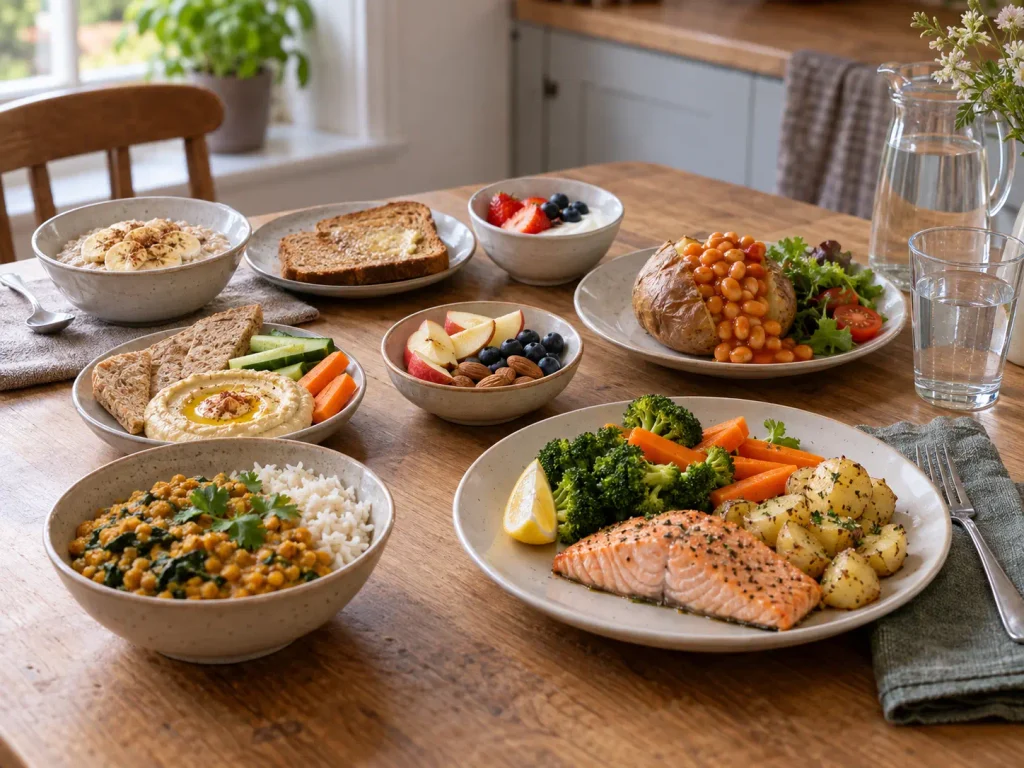
One adaptable day of third-trimester eating
There is no single “right” way to spread food across the day in the third trimester. Appetite and comfortable portion sizes vary: some people prefer three usual meals, while others find smaller meals with snacks easier to manage. Foods can also be adapted for culture, budget, vegetarian or vegan eating, allergies and personal preferences. The example below is simply one way to show balance across the day rather than perfection at every meal.
Breakfast
A simple option could be porridge made with pasteurised milk or a suitable fortified plant alternative, topped with banana or berries and a small handful of nuts or seeds where suitable.
Easy swaps include:
- wholemeal toast with a fully cooked egg and fruit
- pasteurised yoghurt with oats and fruit
Mid-morning snack
Keep this light if breakfast was filling. Options might include:
- yoghurt and fruit
- wholemeal toast with nut butter
- fruit with a small handful of nuts
- crackers with pasteurised cheese
- a fortified plant-based yoghurt or similar alternative
Lunch
Lunch does not need to follow one “British” meal pattern. Practical choices could include:
- a jacket potato with beans and salad
- rice with dal, cooked vegetables and pasteurised yoghurt
- a wholemeal wrap with thoroughly cooked chicken, beans or tofu and vegetables
- lentil or vegetable soup with wholegrain bread
Choose the portion that feels comfortable rather than forcing a large meal.
Afternoon snack
A modest snack can help if the gap before dinner feels long or if smaller meals suit you better.
Examples include:
- fruit and nuts
- yoghurt
- hummus with bread or vegetables
- oatcakes with pasteurised cheese
- fortified plant yoghurt where appropriate
Dinner
One balanced option could be fully cooked salmon with potatoes or rice and cooked vegetables.
Easy swaps include:
- thoroughly cooked poultry
- lentils
- beans or chickpeas
- tofu
A vegetarian or vegan dinner might be tofu with rice and vegetables, chickpea curry with a starchy side, or lentils with potatoes and greens.
Fluids
Drink regularly throughout the day. If very large drinks with meals make fullness or reflux worse, it may feel more comfortable to spread fluids more evenly between meals. This is about timing for comfort, not restricting fluids.
Adapting the day in late pregnancy
If you feel full quickly, split meals into smaller portions and eat the second part later. If heartburn is troublesome, reduce portions and adjust foods or drinks that you already know trigger symptoms. If constipation is an issue, include more wholegrains, oats, fruit, vegetables and pulses alongside regular fluids. If nausea persists or returns, simpler or cooler foods may be easier to tolerate. If appetite is greater than usual, add a nourishing snack or make meals more substantial with protein, starchy foods, dairy or fortified alternatives rather than trying to follow a fixed calorie target.
The aim is flexibility: spread food across the day in a way that is comfortable, varied and realistic for you.
Day-of-eating table
| Time | Example | Easy swaps |
|---|---|---|
| Breakfast | Porridge with milk or a fortified alternative, fruit, nuts or seeds | Wholemeal toast with a fully cooked egg; yoghurt with oats and fruit |
| Mid-morning | Yoghurt and fruit | Nut-butter toast; fruit and nuts; crackers with pasteurised cheese |
| Lunch | Jacket potato with beans and salad | Rice with dal; chicken or tofu wrap; lentil soup with wholegrain bread |
| Afternoon | Hummus with bread or vegetables | Yoghurt; fruit and nuts; oatcakes with pasteurised cheese |
| Dinner | Fully cooked salmon, potatoes or rice, vegetables | Poultry; lentils; beans or chickpeas; tofu |
When individual nutrition advice matters
General healthy-eating advice is enough for many people in the third trimester, but there are situations where nutrition needs become more individual. The appropriate level of support can range from routine advice from a midwife or GP to input from an obstetric team, diabetes service or registered dietitian, depending on the underlying issue and how much it is affecting food intake, blood results or pregnancy care.
Individual advice may be particularly useful where there is:
- persistent vomiting or difficulty keeping food and fluids down
- significant or continuing weight loss
- a very limited diet or severe food aversions
- anaemia or another identified nutrient deficiency
- vegetarian or vegan eating where reliable fortified foods or other nutrient sources are difficult to maintain
- multiple food exclusions, food allergy or coeliac disease
- gestational diabetes or pre-existing diabetes
- thyroid disease or another medical condition affecting nutrition
- a multiple pregnancy
- previous bariatric surgery or another condition affecting nutrient absorption
- concerns raised by the maternity team about appetite, maternal nutrition, fetal growth or blood-test results
Late pregnancy provides several opportunities for these issues to be identified. Routine antenatal care includes another blood test at around 28 weeks to check health and iron levels, which may identify anaemia requiring treatment. People at higher risk of gestational diabetes are generally offered testing between 24 and 28 weeks, and NHS guidance states that those diagnosed with gestational diabetes should receive individual dietary advice, including referral to a dietitian.
Restricted diets do not automatically require specialist care. A well-planned vegetarian or vegan diet, for example, can provide adequate nutrition, but extra advice can be useful if reliable sources of nutrients such as vitamin B12, iodine, calcium or iron are difficult to maintain. Similarly, someone with coeliac disease may already manage their gluten-free diet confidently, while another person with multiple exclusions or food allergy may benefit from dietetic support to maintain enough variety.
Previous bariatric surgery deserves particular attention because some procedures can affect food tolerance and nutrient absorption, and NHS specialist services recommend additional nutritional monitoring during pregnancy. Multiple pregnancy, thyroid disease and other medical conditions may also change the type or frequency of maternity follow-up, but this does not mean everyone with these conditions automatically needs a specialist dietitian.
Prolonged vomiting, severe reflux, strong food aversions or other symptoms can also become nutritionally important if they are reducing intake substantially during weeks 28–40. Severe pregnancy sickness can lead to dehydration and weight loss, and NHS guidance advises clinical assessment when someone is repeatedly unable to keep food or fluids down.
Contact your midwife, maternity unit, GP or urgent-care service if you cannot keep fluids down, have signs of dehydration, feel faint, very weak or dizzy, have persistent or severe vomiting, are losing weight, have severe abdominal pain, vomit blood, or develop a symptom that your maternity team has told you needs urgent review. These symptoms need assessment rather than simply further dietary adjustment.
The purpose of individual nutrition support is not to replace normal eating with a rigid plan. It is to adapt general pregnancy guidance to the person’s actual diet, symptoms, medical history, blood results and maternity care when those factors make standard advice insufficient.
Practical takeaway for weeks 28–40
There is no single perfect way to eat during the third trimester. A practical approach is to aim for variety across the day and week, including fruit and vegetables, starchy foods, regular protein-containing foods, and dairy foods or suitable fortified alternatives. The broader principles in our UK pregnancy nutrition guide still apply, but late pregnancy often requires more flexibility.
Appetite and comfortable portion size can change during weeks 28–40. If larger meals feel uncomfortable because of fullness, reflux or nausea, smaller meals and nourishing snacks can make eating easier. If you feel hungrier than usual, respond with satisfying foods rather than relying on rigid calorie counting. Pregnancy still does not mean “eating for two”.
Third-trimester checklist
- Build variety across the day: include fruit and vegetables, starchy foods, protein-containing foods, and dairy or suitable fortified alternatives.
- Adjust portions to comfort: use smaller meals or snacks if large portions worsen fullness, reflux or nausea.
- Respond to hunger: add nourishing foods or an extra snack when genuinely hungry rather than trying to follow a fixed intake.
- Drink regularly: spread fluids through the day in a way that feels comfortable.
- Keep food safety in place: continue pregnancy food-safety precautions right up until birth.
- Follow supplement advice: use the guidance relevant to your UK nation and continue any treatment prescribed by your maternity team.
- Plan restricted diets carefully: vegetarian, vegan and other restricted diets can work well, but reliable nutrient sources matter.
- Ask for individual help when needed: speak with your midwife, GP, maternity team or a registered dietitian if symptoms, medical conditions, identified deficiencies or very limited intake make general advice difficult to apply.
The most useful approach in the final weeks is therefore simple: keep meals varied, adapt them to your appetite and comfort, continue pregnancy-specific safety advice, and use individual clinical support when your circumstances need more than general guidance.
![How to Fall Asleep Fast? [10 Proven Ways for Better Rest]](https://preggiebites.com/wp-content/uploads/2025/08/how-to-fall-asleep-fast-640x480.jpg)